What to Know Before Visiting Albania (2026)


For the longest time, Albania was known as a “hidden gem” amongst backpackers and off-the-beaten-path adventurers. Fast forward to 2026, and Albania has steadily gained popularity (in large part thanks to social media), transitioning from a hidden gem to a more mainstream European getaway. While I’m happy to see that Albania is finally starting to get the recognition it deserves, I feel that now is truly the best time to visit before it gains even more popularity and Western influence.
During my 5-month backpacking trip through the Balkans in 2018, I remember chatting to a local in Montenegro about my travels, and when I mentioned how I’d be taking a bus to Albania the following day, they responded, “Albania isn’t Europe – you’ll see once you get there”. Obviously this was an exaggeration, but it stuck with me, and once I arrived, I instantly saw exactly what they were talking about.
Albania is truly unlike any other European country that I’ve visited. Not only is their language vastly different from every other language in the region, but the Albanian culture and lifestyle are completely unique compared to what you’ll typically experience in other countries across Europe – something I will discuss further later in this post.
I’ve been to Albania twice now, and I can’t wait to return again in the future. After spending over a month exploring the country, there are definitely a few things you’re going to want to know before going that will help you avoid any hiccups and let you enjoy Albania to the fullest!
Here is everything you need to know before traveling to Albania for the first time:
- Is Albania Safe?
- Can you drink tap water in Albania?
- Best Airport to Fly Into
- Best Time to Visit Albania
- How Much Time Should You Spend in Albania?
- What Language Do They Speak in Albania?
- What Each Region in Albania Has to Offer
- Transportation in Albania
- Currency Used in Albania
- Staying Connected in Albania
- Other things to expect when visiting Albania
- Conclusion
Is Albania Safe?

Yes, Albania is a very safe country. I spent three weeks traveling solo on my first visit to the country, and never felt unsafe during my time there. As with any destination, just be aware of your surroundings and exercise caution at night, especially in dark alleyways or secluded areas.
I always recommend purchasing travel insurance, just in case something happens during your trip. World Nomads is a great option that I’ve used many times, and I highly recommend their insurance plans.

Can you drink tap water in Albania?
Unlike most European countries where tap water is completely potable, you should avoid drinking tap water in Albania due to potential contamination/issues with the water infrastructure. It’s best to stock up on bottled water, just to be safe, during your time in Albania.
Best Airport to Fly Into
The best airport to fly into when visiting Albania is Airport Nënë Tereza (TIA), which is located in the nation’s capital of Tirana. If you are flying from the Americas, you will likely have a layover in a major international airport like Istanbul, Rome, or London. There are plenty of affordable direct flights to Tirana from many of Europe’s bigger cities.
Tirana’s airport is about 20 minutes away from Tirana city center and can be easily reached with a cheap taxi or via public transport.
Best Time to Visit Albania

Albania is truly a year-round destination, but the best time to visit really depends on what kind of trip you’re looking for.
Summer (June to August) is peak season, especially along the Albanian Riviera. The weather is hot, and the water is warm and perfect for swimming, but this is also when the coast gets the most crowded, particularly in Ksamil and Sarandë. If you’re set on visiting during summer, I suggest booking accommodations well in advance and trying to explore popular beaches early in the morning before the crowds arrive.
Shoulder season (April to May and September to October) is honestly my favorite time to visit Albania, and what I’d recommend to most travelers. The weather is still warm enough to enjoy the beaches and hike comfortably, and you’ll also find smaller crowds, more availability at hotels, and lower prices across the board. September, in particular, still has warm water temperatures from the summer months, so you really don’t lose much by visiting outside of peak season.
Winter (November to March) is the quietest time to visit, and while the Riviera isn’t really swimmable this time of year, it’s a great time to explore cities like Tirana, Berat, and Gjirokaster without the crowds. Just keep in mind that some smaller guesthouses and restaurants in beach towns will close for the season, so you’ll want to stick mostly to the bigger cities during these months.
How Much Time Should You Spend in Albania?

I recommend spending at least one week in Albania, but of course, the more time, the better! Albania has so much to offer for a relatively small country, and trying to squeeze all the highlights into just a few days will leave you feeling rushed.
If you have 10 days or more, you’ll have enough time to slow down a little and add in some of the more off-the-beaten-path spots, like the hot springs in Përmet or a day trip to Krujë or Shkodër (my 10 Day Albania Itinerary covers this in detail).
My biggest suggestion is to give yourself enough time to actually enjoy each destination, instead of feeling like you’re just checking places off a list. If you have limited time, I think it’s far better to choose one region to stick to so you can take the time to soak everything in, rather than feel like you’re racing to jam as much into your itinerary as possible.
What Language Do They Speak in Albania?

Albanian is the official language in Albania. English is not commonly spoken throughout the country, with the exception of younger people living in the cities. For this reason, I suggest downloading a translator app to use in case you need to ask any questions or if a friendly local starts chatting with you in Albanian.
One thing that perfectly exemplifies just how unique the Albanian language is: Albanians nod their head up to express “no”, and shake their head to express “yes”, which is the complete opposite of what most of us are used to! It definitely takes some getting used to, so pay close attention to context clues (or just stick to using words) so you don’t get confused during a conversation. As my Albanian friend likes to say, “no means yes in Albanian”!
What Each Region in Albania Has to Offer

Albania might be small (about the size of the state of Maryland / a little bit smaller than Belgium), but it’s incredibly diverse from region to region, and understanding what each area has to offer will help you decide where to focus your time in the country.
Here’s a quick breakdown of Albania’s 3 main regions:
Northern Albania


Northern Albania, renowned for its stunning countryside, is home to the country’s most dramatic mountain scenery (the Albanian Alps). This region has a more remote, rugged feel and sees fewer tourists than the rest of the country.
Popular Tourist Spots Shkodër, Theth, and Valbona
Perfect For Active travelers looking to add some serious hiking and outdoor adventure to their trip
Central Albania


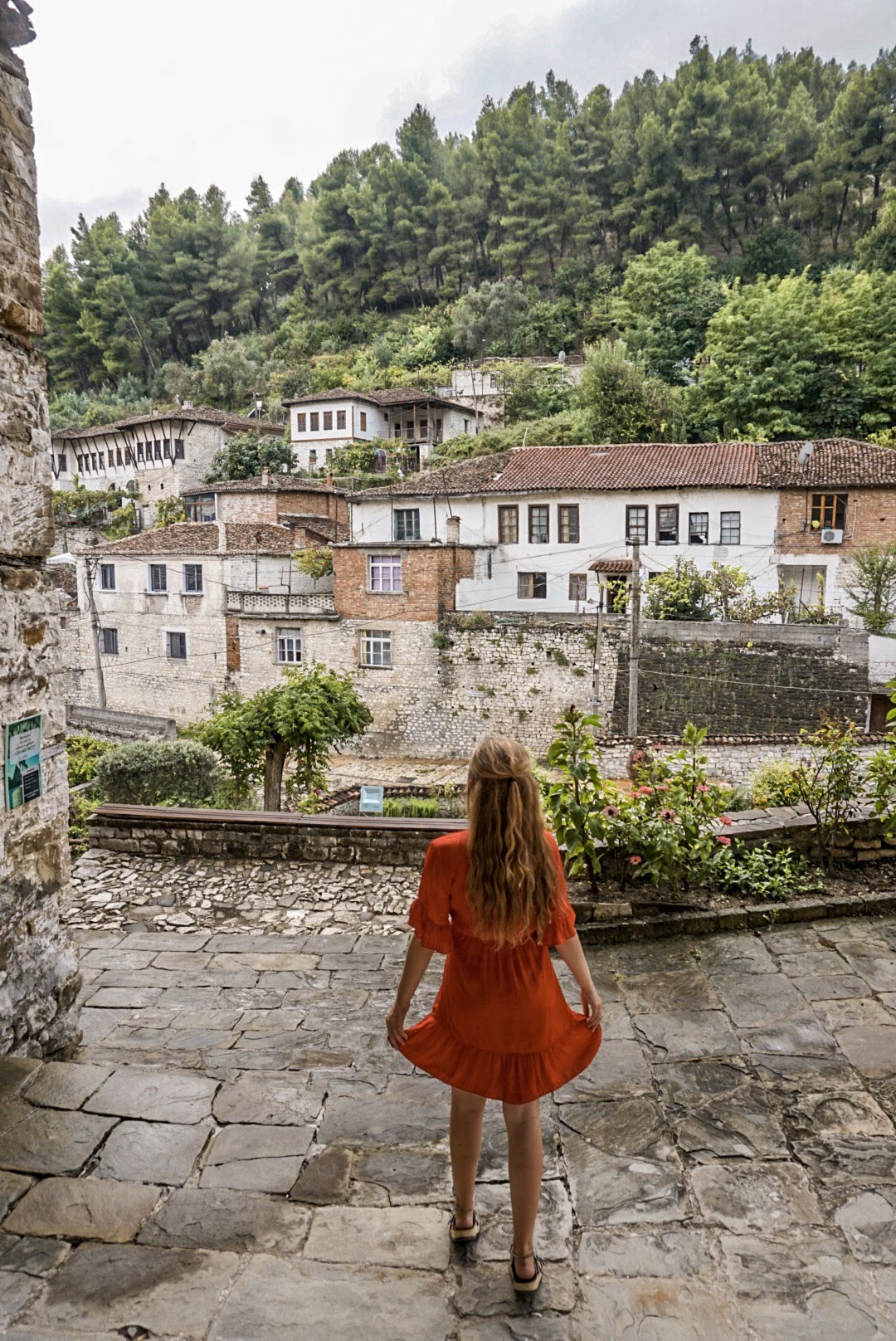
Central Albania is a great region to get a little taste of everything the country has to offer, from UNESCO Ottoman-era towns, stunning countryside, vineyards and ecotourism, natural hot springs, and of course, the gritty, funky capital of Tirana. It’s likely where you’ll start and end your trip in this region since Tirana is home to the country’s main airport, and it makes for a perfect starting point to explore on your way to the coast.
Points of Interest Tirana, Krujë, Berat, Gjirokastër, Përmet, and Korçë
Perfect For Culture lovers who want to experience a little bit of everything that Albania has to offer
Southern Albania (The Riviera)


Southern Albania is the country’s most popular region among tourists, thanks to its stunning stretch of coastline known as the “Albanian Riviera”. This region is home to some of the most beautiful beaches in Europe, with crystal-clear waters and pebbled beaches.
Southern Albania has a nice laid-back atmosphere, making for an ideal beach holiday. It’s a bit pricier than the other regions, but is still quite affordable compared to nearby coastal destinations like Greece or Croatia. It’s also the fastest-developing region in the country, with an increasing number of beach clubs and boutique hotels popping up.
Points of Interest Himarë, Dhërmi, Ksamil, Butrint, Vlorë, and Sarandë
Perfect For Beach lovers, families, and those looking for a relaxing holiday where they can turn their brains off
Transportation in Albania

Getting around Albania is straightforward, and you can either choose to hire a rental car or opt for public transportation. There are local trains you can take in Albania, but there are no train routes connecting the regions, so you will have to rely on public buses if you choose to utilize public transportation to get around the country. You can purchase bus tickets online via Gjirafa Travel; however, you can also just purchase them in person at the bus station.
With all of that being said, if you are comfortable and able to, I highly suggest hiring a rental car. A lot of the buses in Albania are small and can get pretty packed and uncomfortable. You’ll have a lot more flexibility with a rental car and can visit more off-the-beaten-path locations that will be difficult to see using public transportation.
Currency Used in Albania

Albania’s currency is the Albanian Lek (ALL). However, many vendors in cities and tourist spots will accept Euros if you are in a pinch and don’t have any Lekë. I suggest always having some Lekë on hand, as not all establishments will accept credit cards – especially small shops, markets, and street vendors. 100 Albanian Lekë roughly equates to 1 Euro, making it easy to quickly convert the pricing in your head before making any purchases (though make sure to check current exchange rates when you arrive in Albania to make sure you aren’t caught by surprise by any shifts in currency exchange rates).
Staying Connected in Albania
Staying connected in Albania is easy, and the most convenient option is to purchase an eSIM before your trip, instead of searching for a physical SIM card or using an expensive international plan.
Wifi is widely available in hotels, cafes, and restaurants throughout the bigger cities, but it can be spotty or nonexistent in more remote areas or on hiking trails, so having an eSIM as a backup makes a big difference, especially if you’re navigating with a rental car or relying on maps to get around.
Other things to expect when visiting Albania
The Country of Bunkers

Another quirk that sets Albania apart from other European countries is its abundance of abandoned bunkers scattered throughout the country, which were built during Albania’s communist era as a result of leader Enver Hoxha’s extreme paranoia. There are an estimated 175,000 bunkers across the country, so it’s pretty much impossible not to come across them. Make a game out of it and try to keep track of how many bunkers you encounter during your trip to Albania!
Interacting with Locals

Of all the European countries I’ve been to, Albania has, hands down, the friendliest locals I’ve encountered. There were multiple times when I was invited into locals’ homes, where we enjoyed each other’s company via translator app-assisted conversations, dancing to traditional music, and eating home-cooked dishes together. Albanians are quite social, and they genuinely get excited to chat with tourists, especially in areas off the typical tourist path. I have so many beautiful memories of interactions with Albanian locals, something that I will definitely cherish forever!
The Trash Problem in Albania

Like many Balkan countries, Albania unfortunately has a fair amount of trash and litter. You’ll see (and smell) garbage cans overflowing, food wrappers littered on beaches and hiking trails, and beer cans piling up inside many of the country’s abandoned bunkers. It’s upsetting to see, but it should by no means stop you from visiting.
Organized Chaos

Although Albania continues to develop and is becoming more and more tourist-friendly, it can still be pretty chaotic at times. I think one instance that perfectly illustrates this happened to me before I even arrived in the country, as I was waiting for my connecting flight via Air Albania in Istanbul. There was a significant delay because they “didn’t know where the plane was” (keep in mind, there are literally only 2 planes in their fleet). Eventually it arrived, and we made it to Tirana safe and sound, but I had truly never experienced such a strange reason for a flight delay!!
Basically, if Albania was a personality, it would be type B. It’s pretty go-with-the-flow, which is perfect for relaxation, but can lead to bus delays, lateness, and random sidequests. I could see a rigid, type A traveler struggling with this a bit, but it just comes with the territory, so it’s good to have the right expectation beforehand so that you can at least be prepared for possible hiccups.
Conclusion
Albania is one of my favorite countries, and while it’s by no means perfect, it has its own charm that is impossible to find in any other country. You truly have to experience it for yourself to understand what I mean!
I hope this guide helps you feel confident and prepared as you start planning your Albanian getaway. A little preparation goes a long way in having the best experience in this incredible country.
As bittersweet as it is, I think Albania’s “hidden gem” days are limited as it continues to gain interest among travelers, so there couldn’t be a better time to visit before mass tourism begins to affect it!
More Albania Guides You’ll Love

The Ultimate Guide to Tirana, Albania
The full breakdown of Tirana’s best museums, neighborhoods, restaurants, and where to stay for every budget.

10 Days in Albania | The Perfect Itinerary
Ready to see more of the country? This itinerary takes you from Tirana through Berat, Gjirokaster, and the Albanian Riviera.

The Ultimate Solo Travel Guide to Albania
Traveling to Albania alone? Everything you need to know about safety, transportation, accommodation, and more.