The Ultimate Guide to Jajce, Bosnia and Herzegovina


If you are planning a trip to Bosnia and Herzegovina, chances are your itinerary already includes Sarajevo and Mostar. And while both of those cities are absolutely stunning and deserve a spot on your list, there is one small town, Jajce, that I would argue is one of the most beautiful and underrated destinations in the entire Balkans – and I have explored dozens of towns in the region! I genuinely believe that it deserves far more recognition than it currently gets.
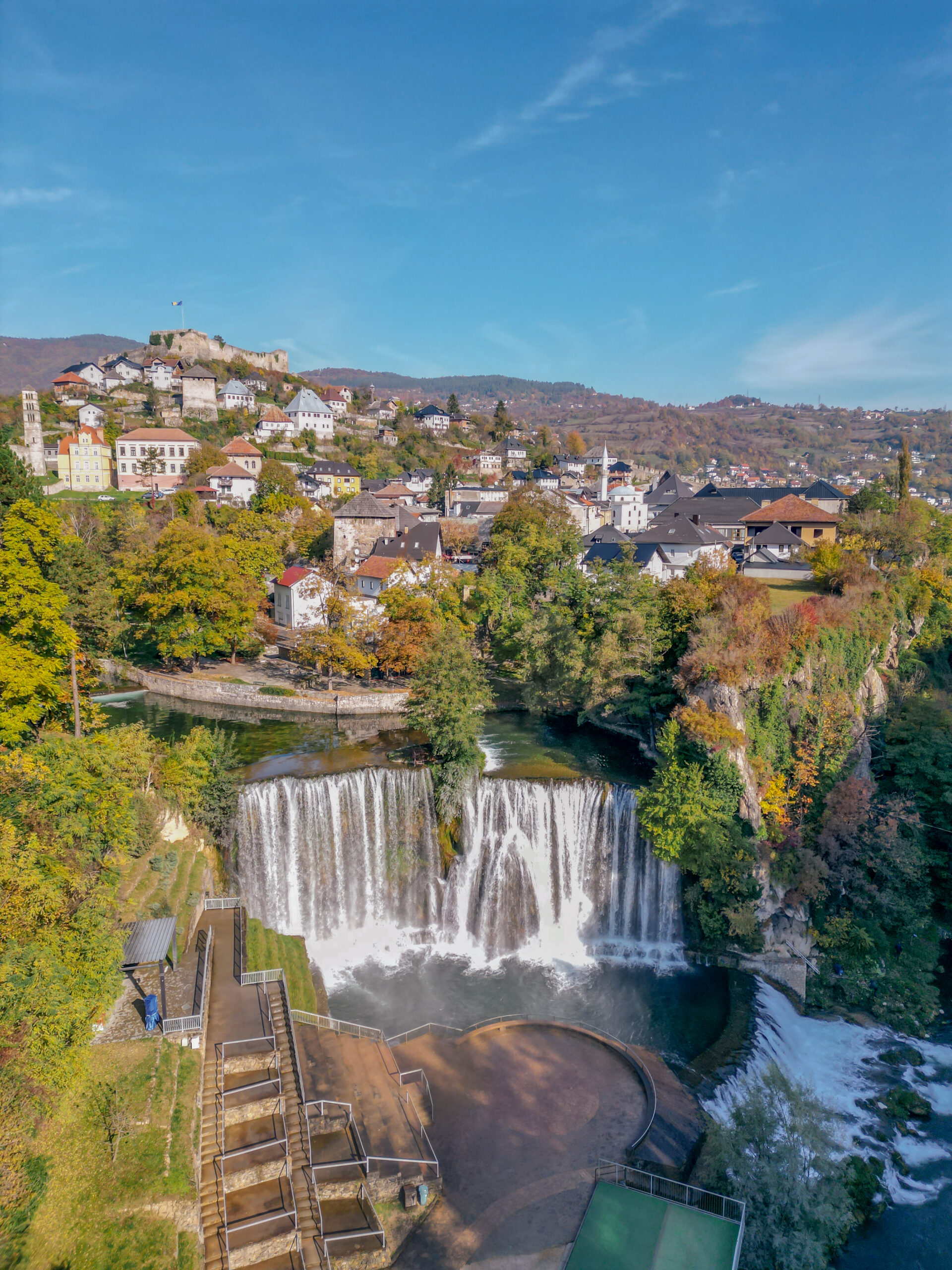
Nestled in central Bosnia, Jajce is surrounded by rolling hills and lush mountains, with a medieval fortress perched high above the town, ancient stone gates, charming cobblestone streets, and even a spectacular waterfall right in the town center!
Jajce has a warm, unhurried local atmosphere that is increasingly rare to find in European tourist hotspots today. Even better, we visited in October, and the fall foliage made the whole experience feel SO incredibly magical. I really am so grateful that we made the decision to add it as a stop along our Bosnia road trip itinerary!
In this guide, I will cover everything you need to know about visiting Jajce, including how to get there, where to stay, the best things to do, and my personal tips for making the most of your time in this wonderful town.
This post contains affiliate links, which means I earn a small commission on purchases made through these links. All opinions are my own.
💡 Tips for Visiting Jajce
- 💵
Bring cash. Jajce is a small town, and not all places accept credit cards. The entrance fees to attractions are very reasonable, but it helps to have some Bosnian Convertible Marks (BAM) or Euros on hand (they accepted Euros when I went).
- 🌅
Visit the waterfall early in the morning. The lighting is beautiful, and you will likely have it almost entirely to yourself!
- 🏰
Time your fortress visit for late afternoon or sunset. The views at golden hour are absolutely extraordinary.
- 👟
Wear comfortable shoes. The walk up to the fortress involves a fair number of stairs, and the old town streets are cobblestone. Plus, you’ll be exploring the entire town on foot, so you’ll get your fair share of steps during your visit.
- 📅
Spend at least two days here. I suggest a full day exploring the town and a second day for the mills, the lakeside trail, and the horseshoe bend viewpoint.

A Brief History of Jajce

Dating back to the 14th century, Jajce was the capital of the independent Kingdom of Bosnia for many years. It was ruled by powerful medieval Bosnian dynasties, including the Kotromanić royal family, who reigned for nearly two centuries. In 1463, Jajce fell to the Ottoman Empire after the last Bosnian king was executed. It was briefly captured by Hungary, but the Ottomans returned in 1527 and remained in power for 350 years. In 1878, it was occupied by Austria, and eventually became part of Yugoslavia after World War I.
In November 1943, during World War II, Jajce acted as the base of operations for Communist resistance under Marshal Tito (the future leader of Yugoslavia), and hosted the second session of the Anti-Fascist Council for the National Liberation of Yugoslavia (AVNOJ), the provisional parliament that drafted the postwar constitution and laid the groundwork for the Federal Republic of Yugoslavia. You can still visit the building where this historic session took place, which has since been turned into a museum!
In more recent history, Jajce was heavily impacted by the Bosnian War that lasted from 1992 to 1995. Bosnian Serb forces took over in October 1992 during Operation Vrbas, and many mosques were destroyed during the occupation. After it was taken back by the Bosniaks in 1995, Jajce has slowly rebuilt over the years, and several of its mosques and historical sites have been restored. Just as in Sarajevo and Mostar, you’ll still see buildings with exterior damage from the shelling that took place just 30 years ago.
How Much Time Do You Need in Jajce?

Jajce is a small town, and it can technically be explored in a single day, including a walk up to the fortress and a visit to all the main sights in the town center. However, I would strongly suggest allocating at least two days so that you can also make the trip to the Pliva watermills and lakes, which are a short drive outside of town, and ideally, squeeze in the horseshoe bend viewpoint north of the city, if you have a car.
I feel like rushing through Jajce would mean missing a lot of the magic that can be found in its slowness. Sorting at a cafe in the morning sun and watching local life unfold is just as worthwhile as any of its attractions.
When is the Best Time to Visit Jajce?

Jajce is a year-round destination, but in my opinion, the best time to visit is late spring or fall. We visited in October, and the fall foliage in the region was absolutely breathtaking! There were hardly any other tourists around when we visited, which made it all the more peaceful and allowed for a wonderful glimpse into Jajce’s local life.
Summer is also a great time to visit if you would like to swim in the Pliva Lakes and enjoy warm temperatures, though you can expect more visitors during the peak months. There are more summer attractions and activities available, as well, like boat rentals and lakeside cafes that haven’t yet closed for the season. Winters in Jajce are cold, but the town looks beautiful when it’s dusted in snow – just be ready to bundle up!
How to Get to Jajce

🚗 By Car
Driving a rental car is by far the most convenient way to get to Jajce. We drove from Mostar, and the mountain scenery that we passed through was truly breathtaking, especially since we visited when the area was in peak fall foliage, and the mountains were painted with stunning fall colors.
📍From Mostar: The drive from Mostar takes approximately 2.5 to 3 hours.
📍From Sarajevo, the drive is around 2 hours and 25 minutes.
Both routes take you through some incredibly scenic Bosnian countryside that is well worth savoring. Trust me, you’ll definitely want to pull over several times along the way to take in the views!
🚌 By Bus
There are direct bus connections from Mostar and Sarajevo to Jajce. So, if you choose not to rent a car during your time in Bosnia, you can still easily get to Jajce! It will just make getting to the Pliva lakes and watermills a little more challenging, but it’s definitely still doable.
📍From Mostar: direct buses to Jajce are operated by companies including Croatia Bus and FlixBus, and take around 4 hours, with tickets generally costing €14-€18.
📍From Sarajevo: Buses leave twice daily from the East Sarajevo Bus Station via Centrotrans Eurolines. The journey from Sarajevo takes about 3.5 hours, with tickets generally ranging from €18-€22. Just make sure to check schedules in advance, as times can vary by season.
Where to Stay in Jajce
Jajce is a small town that is not yet heavily set up for tourism, so keep in mind that accommodation options are more limited compared to Sarajevo or Mostar, and you should not expect luxury hotel options here. However, what you will find are charming guesthouses, apartments, and small local hotels that offer a warm and genuinely hospitable experience. Below are some of Jajce’s best accommodation options:

Prenoćište Slapovi
$$$Charming riverside retreat situated outside of Jajce, near Pliva Lakes. It offers beautiful mountain views and a lovely pool on site, and is about as luxurious as it gets in the Jajce area.
Book now →
Hotel Stari Grad
$$Jajce’s most famous hotel, located right in the heart of the old town. It has a fantastic on-site restaurant with a glass floor above the remains of a Turkish hammam, which is an experience in itself!
Book now →
Privatni Smještaj Kurtalija
$Top-rated private guesthouse in the old town, known for its fantastic location near the fortress, stunning views from the terrace, and a host who welcomes guests with traditional Bosnian coffee.
Book now →
Hotel Premium
$Stylish hotel in the heart of the old town with modern rooms and affordable prices.
Book now →🚘 All options above include free on-site parking
Top Things to Do in Jajce
Pliva Waterfall

Pliva Waterfall is Jajce’s most iconic landmark, sitting right at the edge of the town center where the Pliva River meets the Vrbas River. The falls are roughly 20 meters tall and make for incredibly picturesque, “postcard-worthy” views!

What makes this waterfall so unique is that you can actually walk down to a platform right at the base of it, standing close enough to feel its mist on your face. I can tell you from personal experience that you absolutely will get wet, so plan accordingly, but you truly should not skip it. Standing right in the middle of town and watching the water crash down in front of you is unlike anything I have ever experienced!
Entrance to the viewing platform costs 5-10 BAM (€2.50 to €5.00) per person, depending on the time of year you visit. The best view of the waterfall and the town together is actually from the bridge over the main highway, across the Vrbas River, just past the bus station. I recommend going in the morning when the light is beautiful and the crowds are nonexistent.
Jajce Fortress

Perched high on a hilltop overlooking the old town, Jajce Fortress offers stunning panoramic views of the surrounding mountain scenery. Dating back to the 14th century, it was once home to some of the most powerful rulers in the region’s history!
The trek up to the fortress is a bit of a workout, and you’ll have to climb a few hundred stairs, but the views from the top make it absolutely worth it! I would strongly suggest timing your visit for late afternoon or just before sunset. The light that falls over the mountains at golden hour, combined with the views looking out over the town below, was one of the most beautiful things that I witnessed during our entire Bosnia trip!

I would avoid visiting the fortress midday, especially in the summer months, so you don’t have to hike up with the sun blazing down on you. Entrance to the fortress costs approximately 5 BAM (€2.50) per person, and the hike from the town center takes around 10-15 minutes each way.
The Catacombs of Jajce

Located within the old town walls along the way to the fortress, the Catacombs of Jajce are another one of the town’s ancient attractions. They were ordered to be built by Duke Hrvoje Vukčić Hrvatinić in the early 15th century, who wanted his family to be buried within the city walls. As you descend the steep stairs into the cool underground chamber, you will find unfinished reliefs of the duke’s tomb, the coat of arms of the House of Hrvatinić, and beautifully carved decorative details throughout.
Entrance to the catacombs is 2 BAM (€1.00) per person. I suggest stopping by for a quick stop as you make your way up towards the fortress!
Jajce’s Medieval Old Town and Town Gates

One of the things I loved most about Jajce is that it is an actual medieval walled town, with ancient stone gates still standing at the entrance to the town. You’ll see cars drive through these gates as locals go about their daily routine within the walls. The main street is lined with lovely fountains, cafes, and restaurants, and the whole town has a wonderful, authentically local feel.

You’ll see children playing and kicking soccer balls around in the courtyards, older gentlemen settling in at a cafe with a coffee and a cigarette, and locals carrying groceries home through the stone gates. I suggest slowly enjoying a coffee at a cafe in the town center, where you’ll have the opportunity to take everything in and feel like you’re a part of the local life.
The AVNOJ Museum

Located near the waterfall and bus station, the AVNOJ Museum marks the building where the historic 1943 session of the Anti-Fascist Council took place, which effectively shaped the future of post-war Yugoslavia. It is a relatively small museum, but fascinating for anyone interested in 20th-century European history. Entrance is 8 BAM (€4.00) for adults and 3 BAM (€1.50) for children.
Gradski Park

We stumbled upon Gradski Park on our way to the Pliva Waterfall, and it ended up being one of my favorite spots in Jajce! A peaceful stream dotted with small waterfalls flows through the park before eventually becoming the famous Pliva Falls. It was the perfect spot for an evening stroll, and since it sits right along the natural path to the waterfall, it is incredibly easy to incorporate into your visit without going out of your way at all!
Ethnographic Museum Jajce

Jajce’s Ethnographic Museum features a collection of traditional Bosnian costumes, handicrafts, household items, and folk art, and offers a nice glimpse into what life looked like in this region of Bosnia centuries ago. It’s a small museum, so it shouldn’t take more than 30 minutes to check out!
Pliva Watermills (Mlinčići)

The Pliva Watermills (AKA “Mlinčići”) are just a 10-minute drive north of Jajce. Originally built in the 16th century, the watermills were used for grinding grain. They are no longer functioning; however, they have been beautifully preserved and restored into an open-air museum that looks like something out of a fairytale!

There are little wooden pathways that wind through the mills, which allow you to get up close to look at them. The surrounding area is a lovely nature park with reflective lakes, rushing streams, and lush greenery. There is also a nice walkway where you can stroll around after exploring the mills.
The mills are free to visit; however, there is a small parking fee that can be paid in euro coins, so make sure to bring coins with you if you have a rental car!
Bridge of Love and the Lakeside Forest Trail

Located right near the watermills, you will find the Bridge of Love, a charming wooden footbridge that connects the two sides of the lake, letting you walk above rushing waterfalls that cascade into the lower river below. It reminded me a little bit of the boardwalks in Croatia’s Plitvice Lakes!

From here, I would highly recommend taking the lakeside forest trail that winds through the trees along the water. It’s so peaceful and passes by lots of beautiful mini waterfalls! It doesn’t take long to complete, but it is the perfect way to wind down after seeing the mills and gives you the opportunity to simply breathe in the beauty of the surroundings without rushing anywhere.
Vrbas River Bend Viewpoint

If you have a little extra time (and a rental car), I highly suggest checking out the Vrbas River Bend Viewpoint, which is about a 30-minute drive north of Jajce, toward Banja Luka. I randomly stumbled across this viewpoint while looking for things to do nearby on Google Maps, and I was shocked at how much it reminded me of the famous Horseshoe Bend in Arizona. The key difference is that instead of red sandstone, you are surrounded by lush green (or, in our case, peak fall-colored) forest, and instead of crowds of tourists, there is almost no one there!
The drive from Jajce is incredibly scenic, with lots of mountain views, so the drive there is part of the experience. There isn’t a ton going on in the area aside from the viewpoint, so plan to spend about an hour and 15 minutes on this excursion, including the drive there and back, and the time to enjoy the views and take some photos.
Where to Eat and Drink in Jajce
Some of the best meals I had in Bosnia were in Jajce, and while there aren’t a ton of restaurant options to choose from, meals here are hearty, affordable, and full of flavor! Here are a few of the best cafes and restaurants in Jajce:
🍲 Best Restaurants in Jajce

- Restoran Cosmopolit: This is a wonderful restaurant very close to the waterfall area in the town center, where I ended up eating twice because the food was so good! They serve traditional Bosnian stews and comforting, homestyle dishes at very reasonable prices, and the staff is incredibly warm and welcoming.
- Restoran Stari grad: The restaurant attached to Hotel Stari Grad, in the town center, is one of the best dining options in Jajce! Not only was the meal we ate here delicious, but the inside is built directly on top of Turkish ruins that you can look at through a glass window.
- Restoran Omerbegova kuća: A cozy, casual restaurant, adorned in traditional Bosnian furnishings, that serves hearty meat dishes that come in huge servings!
☕ Best Cafes & Bakeries in Jajce

- Charlie Cafe: A popular local cafe in the heart of the old town with a relaxed atmosphere and tasty coffee drinks. It is a great spot to settle in and watch the locals go about their daily lives. This was my favorite spot to enjoy my morning coffee! There are several other good cafe options along the same street; Charlie was just my cafe of choice during our time in Jajce.
- Bedem: Small burek shop, located just a few steps outside the center, which I would rank among the best burek places that I have tried in Bosnia! They sell nothing but burek, which is always a good sign, and the flaky, savory pastries were delectable! For 1 euro each, this is the perfect place to grab a quick breakfast or an afternoon snack to refuel with as you explore the town.
- Granny Kate’s: For a sweet treat or a morning pastry, I recommend stopping by Granny Kate’s, a small bakery a short walk from the town center. I spent some time chatting with the owner, who told me she named the bakery in memory of her grandmother, who taught her how to bake!
Conclusion
I absolutely loved my time in Jajce, and I could easily see myself spending more time here, even after checking off all of the town’s highlights. While the waterfall in the town center is the main attraction, there are so many things that Jajce has to offer that make it one of my favorite towns I’ve visited in the Balkans.
Bosnia and Herzegovina as a whole is one of the most underrated countries in Europe, and in my opinion, Jajce is one of the country’s hidden gems! If you are visiting the country and have any time to spare beyond Sarajevo and Mostar, I highly suggest making the effort to get to Jajce, even if it’s a little out of the way from the main tourist trail.
Like this post? Pin it for later!