Everything to Know Before Visiting Bosnia & Herzegovina for the First Time


Bosnia & Herzegovina is one of my absolute favorite countries in the world, and after visiting 3 times now, I think it’s safe to say there’s something special about it that keeps bringing me back!
Bosnia is definitely not what I would consider a luxury destination, and if you’re looking for a more glamorous vacation, you should probably look into visiting Croatia or Italy instead. The thing is, Bosnia has a soul and a depth that you simply won’t find in more commercial tourist destinations filled with resorts and 5-star hotels.
Bosnia is still healing from a devastating war and genocide that happened just 30 years ago, and there are a few things that might catch first-time visitors off guard. A little preparation goes a long way when visiting Bosnia, and knowing what to expect before you arrive will help you get so much more out of your trip (and avoid a few hiccups along the way)!
In this guide, I’ll cover everything you need to know before visiting Bosnia & Herzegovina, including entry requirements, how to get around, local customs, safety information, what to expect, and the best time of year to visit.
This post contains affiliate links, which means I earn a small commission on purchases made through these links. All opinions are my own.
Important Things to Know When Planning Your Trip to Bosnia

Bosnia isn’t part of the EU or the Schengen Zone
While many tourists visit Bosnia during a combined trip with Croatia and Slovenia, many don’t realize that Bosnia is not a member of the European Union or the Schengen Area, which means you’ll have to go through a border checkpoint every time you cross in or out of the country, and you’ll get a passport stamp each time. There’s usually a line, especially on the Croatian border, so be prepared to wait for 20 minutes or so, depending on traffic conditions.
That said, the number of days you spend in Bosnia will not be included in your 90-day Schengen Zone limit. So if you’re doing a longer multi-month Europe trip and running low on Schengen days, Bosnia is a fantastic place to spend some time!
If you are unfamiliar with the Schengen area and rules for visiting, you can check out this article for more information.
Visa Requirements in Bosnia
Most visitors don’t need a visa to visit Bosnia & Herzegovina, but if you hold a US, UK, or Canadian passport, in particular, you can enter Bosnia visa-free for up to 90 days within a 180-day period. Just make sure you have a return or onward ticket handy, since immigration officers will sometimes ask to see it.
Something important to note is that foreign visitors are required to register their address with local authorities shortly after arriving, but if you’re staying in a hotel or guesthouse, the staff will take care of this when you check in. If you’re staying in a private apartment or Airbnb, just ask your host whether they’ll handle the registration for you.
The Best Airports to Fly into for a Bosnia Trip
Flying into Sarajevo (SJJ) is the most direct way to reach Bosnia, and I highly recommend choosing this airport (if you are not from Europe, there are good connecting flights from hubs like Vienna and Istanbul).
Depending on where you are flying in from, Sarajevo can sometimes be a little tricky or pricey to reach, so a good alternative is Dubrovnik, Croatia (DBV). Dubrovnik is just 2.5 hours from Mostar by car or bus, and combining Croatia + Bosnia into one trip itinerary is quite popular amongst travelers

The Best Time of Year to Visit Bosnia & Herzegovina

Bosnia is a year-round destination, but the time of year you visit will make a huge difference in your experience. I’ve visited in May, August, and October, and October was hands down my favorite! The weather was mild and perfect for walking around all day, and the fall foliage throughout the country was absolutely stunning.
Mild temperatures, everything in bloom, and the highest water levels of the year at Bosnia’s waterfalls.
Brutally hot (especially in Herzegovina) and the busiest season, but the only time warm enough to swim at Kravica.
Mild weather perfect for walking around all day, thinner crowds, and absolutely stunning fall foliage.
Cold and quiet, with affordable skiing near Sarajevo (home of the 1984 Winter Olympics) and the lowest prices of the year.
Summers in Bosnia can bring brutal temperatures, especially in the Herzegovina region (where Mostar is located), so if you’re visiting in July or August, bring lots of water everywhere you go and remember to pack sunscreen! Summertime also brings in the most crowds, and tourist hot spots like Mostar’s Old Town can feel overwhelmingly packed at times. On the plus side, if you want to go for a swim in some of Bosnia’s waterfalls like Kravica, summer is pretty much the only time of year you can, since the water gets pretty chilly.
Spring is a lovely time to visit Bosnia, while the temperatures are mild and everything is starting to come back into bloom. May is the best time to experience Bosnia’s beautiful waterfalls, since water levels are usually the highest during that time of year.
Winters can be quite cold, but if you love to ski, there are some amazing (and affordable) ski resorts around Sarajevo, where the 1984 Winter Olympics were held! Outside of skiing, wintertime is pretty quiet, so it could be a great time to visit for a more local experience. Prices will also be at their absolute lowest during winter, which could make it a great option for especially budget-conscious travelers.
Money in Bosnia & Herzegovina

Currency in Bosnia
The official currency of Bosnia & Herzegovina is the Bosnian Convertible Mark (BAM), which locals refer to as the KM (short for konvertibilna marka). The Mark is pegged to the euro, so the exchange rate stays at roughly 2 BAM to €1, which makes calculating prices in your head super easy!
Many businesses in touristy areas, especially in Mostar’s Old Town, will also accept euros. You’ll find that many shops along Kujundžiluk (Mostar’s Old Bazaar) actually have pricing in Euros AND Marks. You’ll see this in Sarajevo as well, but it’s more common in Mostar than anywhere else in the country.
Bosnia is still a very cash-based society
While cards are accepted at most hotels, boutique shops, and larger restaurants, Bosnia is still very much a cash society, so you’ll definitely want to keep some BAM on you at all times. You’ll need cash for small bakeries, cafes, public buses, market stalls, and souvenir shops. Furthermore, many attractions outside the big cities are cash-only as well. You’ll also want cash to tip your guide on free walking tours, which I highly recommend doing (more on that later).
It’s also always best practice when purchasing from a small local shop to pay in cash, even if card is an option. It’s something small you can do to better support the local economy, since the shop owners usually have to just eat the expense of the card processing fee. Plus, if a small shop DOES take cards, there will often be a minimum purchase amount, and you might end up needing to pay more than you initially intended.
Taking out Cash in Bosnia (and avoiding ATM fees)

Since you’ll need cash for so much of your trip, you’ll likely have to make a few ATM stops during your time in Bosnia. ATMs are easy to find in Sarajevo, Mostar, and other larger towns, but it’s important to note that some ATMs will charge higher fees than others.
A good price for an ATM withdrawal fee in Bosnia is typically 8-10 BAM, and I would personally skip anything higher unless it’s your only option. I think the highest I paid was 16 BAM for a transaction fee since I had to take some cash out in Mostar Old Town.
You’ll find standalone ATMs like Euronet scattered around the busiest tourist areas, including right in Baščaršija and Mostar’s Old Town. These are super convenient, but they’re notorious for charging high withdrawal fees and unfavorable exchange rates. Instead, use ATMs attached to local banks, which typically charge much lower fees (or none at all).
ATMs will ask if you’d like to be charged in your home currency (like USD) instead of BAM, but the exchange rate for this option is not good. Always choose to be charged in the local currency (BAM), and let your own bank handle the conversion. The same goes for card machines at restaurants and shops.
Since many ATMs charge a flat fee per withdrawal, it’s usually cheaper to take out a larger amount at once rather than making lots of small withdrawals. I’d usually find myself taking out 200 to 300 BAM at a time because I was doing a lot of souvenir shopping.
You’ll likely encounter beggars, including children
You’ll likely encounter people begging in the busier tourist areas, especially around Baščaršija in Sarajevo and Mostar’s Old Town. Unfortunately, some families send their children out to beg, which can be really heartbreaking to see, and it’s something I wish I had been more prepared for on my first visit.
How you respond is completely up to you, but a common piece of advice is to avoid giving money directly to children, since it can encourage families to keep them out of school and on the streets. If you’d like to help, consider donating to a local charity or organization that supports families and children in need instead.
Getting Around Bosnia & Herzegovina

Public Transportation VS Renting a Car in Bosnia
Bosnia doesn’t necessarily have the best public transportation system in Europe, but you can absolutely get around the country without a car, especially if you only plan to visit more popular tourist towns and cities.
The train from Sarajevo to Mostar is truly magical and is widely regarded as one of the most scenic train rides in all of Europe! During the 2-hour train ride, you’ll wind through dramatic mountains, river gorges, sleepy villages, and Bosnia’s gorgeous countryside. A one-way ticket costs between €7 and €9. Buses also run frequently between most major towns, but I personally preferred taking the train whenever I could.
On our most recent trip to Bosnia, we had a rental car and it definitely made getting around a lot more comfortable and flexible, especially if you want to pull over at scenic lookouts or stop by smaller towns and villages! Parking garages in Bosnian cities also tend to be quite affordable and easy to navigate (though the most central ones will fill up fast, especially in peak season and on weekends). If you do decide to rent a car, make sure your accommodation includes parking to avoid any headaches.
Getting Around via Guided Tours
If you plan to rent a car from a different country like Croatia, double-check with your rental company ahead of time, since not all rental agreements allow cross-border travel, and those that do usually charge an extra fee. When I rented a car from National in Dubrovnik, I had to pay a one-time fee of €60 since we were crossing into a non-EU country.
I want to note that you don’t necessarily need a car to see rural Bosnia! Since so many of Bosnia’s most beautiful spots are a short drive from the main cities, there are tons of tours available that take care of all the logistics for you.
Taxis in Bosnia
Taxis are easy to find in Sarajevo and Mostar, and while many do run on a meter, it’s good practice to confirm the fare (or agree on a price) with your driver before you start moving. This is especially important if you’re heading somewhere far outside of the city center, like the War Tunnels Museum near Sarajevo Airport or the top of Hum Hill in Mostar.
Culture & Etiquette in Bosnia & Herzegovina
Bosnia is a Predominantly Muslim Country

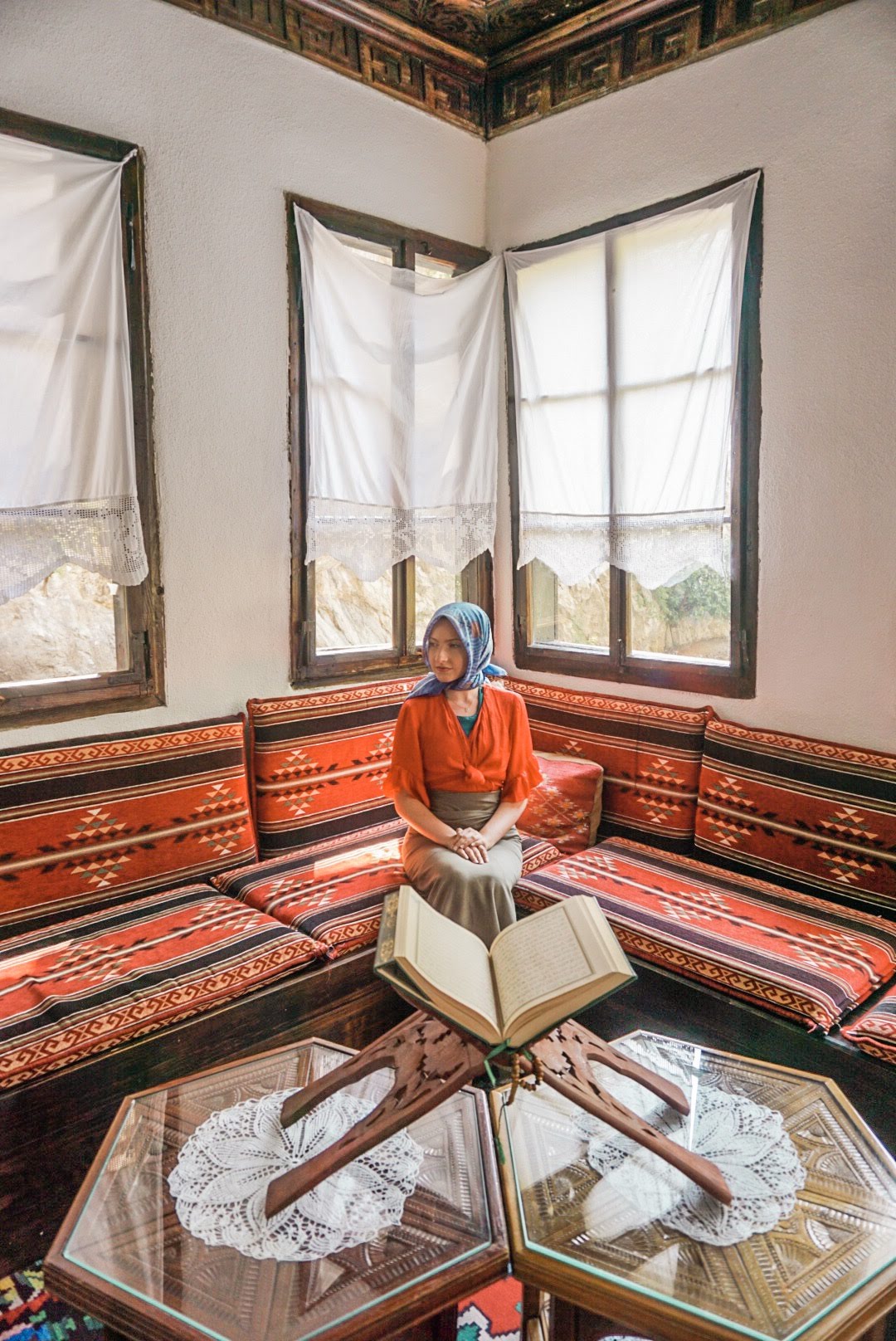
Since Bosnia’s population is 51.3% Muslim, it’s home to many beautiful mosques, and visitors are welcome to step inside most of them outside of prayer times. Just remember that these are active places of worship, so you are expected to dress modestly and remove your shoes when visiting. Some places like the Gazi Husrev-beg Mosque in Sarajevo and the Blagaj Tekija require women to cover their hair, with headscarves provided at the entrance (no need to pack one of your own).
Alcohol is widely available throughout Bosnia, but some Muslim-owned restaurants may not serve alcohol, especially in predominantly Muslim neighborhoods like the Bosniak side of Mostar and Baščaršija in Sarajevo.
The Bosnian Language is nearly identical to Serbian and Croatian
The official languages of Bosnia & Herzegovina are Bosnian, Croatian, and Serbian, but they’re essentially the same language! They do have some small differences in vocabulary and pronunciation, but speakers of all three understand each other perfectly, so any phrases you pick up in Bosnia will also come in handy if you’re continuing on to Croatia, Serbia, or Montenegro.
English is widely spoken by younger people and anyone working in tourism, but learning a few simple phrases goes a long way, and locals always appreciate the effort!
- Dobar dan: Good day (a polite hello)
- Hvala: Thank you
- Molim: Please (and also “you’re welcome”)
- Izvinite: Excuse me or sorry
Smoking is still very common in Bosnia
Smoking is a huge part of local culture in Bosnia, and you’ll find people smoking on restaurant terraces, and even indoors in more local bars and cafes. During the War & Scars walking tour I did in Sarajevo, my guide joked that if Bosnians could redesign their flag, it would have an image of cigarettes and cevapi (the most famous Bosnian dish). So yes, Bosnians definitely love their cigarettes! If you are sensitive to the smoke, choose to sit inside at dining areas or look for places without busy outdoor seating areas.
Regions in Bosnia
Bosnia is Made Up of 2 Distinct Regions
Bosnia and Herzegovina are actually two distinct historical regions that make up one country! Bosnia is the larger, more mountainous northern region, home to places like Sarajevo, Jajce, and Lukomir. Herzegovina is the smaller southern region, with a warmer, more Mediterranean climate and rocky landscapes, home to Mostar, Blagaj, Počitelj, Kravica Falls, Trebinje, and Međugorje. You’ll definitely notice the difference as you travel between the two, especially in the summer when Herzegovina gets HOT! It almost feels like going from Switzerland to Italy in terms of climate and geography.
It’s totally fine to refer to locals as Bosnians, since that’s the common term for anyone from the country. However, according to my wonderful Mostar tour guide, Sheva, locals in some parts of Herzegovina prefer to call themselves Herzegovinians, particularly in places like Međugorje, which is the famous Catholic pilgrimage town near Mostar.
Bosnians VS Bosniaks
You might also hear the term Bosniak, which is different from “Bosnian.” Bosniak refers to the country’s Muslim ethnic group specifically, while Bosnian refers to anyone from Bosnia & Herzegovina, regardless of their background. The Bosniaks were notoriously the main demographic targeted by the Serbs during the Bosnian genocide of the 1990’s, so you’ll usually hear the term used in regard to wartime discussions.
Bosnia’s Political Entities

Following the peace agreement that ended the war in 1995, Bosnia & Herzegovina was split into two main entities: the Federation of Bosnia and Herzegovina, Republika Srpska, along with the small, self-governing Brčko District located in the northeast of Bosnia.
The most noticeable difference as a traveler is that in Republika Srpska, you’ll find a lot of signs written in Cyrillic, including road signs, shop names, and restaurant menus. There are also a lot more Serbian nationalists living in Republika Srpska, so tensions remain pretty high between regions.
Safety in Bosnia & Herzegovina
Serious crime is rare, but pickpocketing is common in tourist areas

Bosnia is a very safe country. Violent crime is very rare, and Bosnia is a fantastic destination for solo travelers. I spent around 10 days traveling solo around the country and had a fantastic experience with absolutely no hiccups.
With that said, petty crime like pickpocketing is common in busy tourist areas, so it’s important to keep an eye on your belongings. The two biggest hotspots are:
- Baščaršija in Sarajevo: Especially around the Sebilj fountain and the main square, where crowds gather (and everyone is distracted by the hundreds of pigeons)!
- Mostar’s Old Town: Particularly in the crowded, narrow alleys leading up to Stari Most during peak day-tripper hours.
I’ve never been pickpocketed in Bosnia, and my biggest advice is to just be aware of your surroundings and don’t look like an oblivious tourist. I always wear a crossbody bag when I travel, and put my hand on top of the zipper when I am in more congested tourist areas.
I’d also highly recommend getting travel insurance for any trip abroad, just in case!
I’m a big fan of SafetyWing Nomad Insurance because it’s budget friendly and perfect for frequent travelers. It’s a subscription model, so you only pay for the days you’re actually exploring, and it covers major issues (like if you take a tumble on Mostar’s famously slippery cobblestones!) so you can spend your “emergency fund” on an extra night in Mostar instead!
Landmines are still present in rural areas

⚠️ This is the most important safety tip in this entire post. Because of the war in the 1990s, undetonated landmines are still a real issue in remote and rural areas of Bosnia. The tourist areas you’ll be visiting are completely safe, but you should never wander off marked paths or into abandoned buildings in the countryside unless you’re with a certified local guide.
For example, if you’re hiking up Hum Hill in Mostar, always stick to the paved road on the way up rather than cutting across the hillside, since there are still undetonated landmines in areas off the marked path. The same goes for hiking anywhere in the mountains. Stay on the trails, and you’ll be perfectly fine!
History, War, and Politics in Bosnia & Herzegovina
Bosnia is a country that’s still healing from such a recent wartime, and there are a few things that might surprise you if it’s your first time visiting. None of these should stop you from going, but knowing what to expect ahead of time will help you understand the country on a much deeper level and make your trip even more meaningful.
You’ll see visible reminders of the war in most Bosnian cities

The old towns of Sarajevo and Mostar have been beautifully restored, but you don’t have to walk far outside of the tourist centers to see what the country went through during the war in the 1990s. Many buildings are still riddled with bullet holes and shrapnel damage, some windows and doorways are still blocked with sandbags (a defense mechanism used to stop bullets from entering), and some structures are slowly crumbling to the ground. In certain areas, it can honestly look like a warzone. If you choose to stay in an Airbnb, it’s very possible that the apartment exterior will have some shrapnel scars, even at some luxury apartments.
I want to be super clear that this is no longer a safety issue at all, but it can be pretty jarring to see if you aren’t prepared for it. When I first crossed into the newer side of Mostar, I was stunned by how many apartment buildings still bore the scars of the siege, just a few minutes away from the picture-perfect Stari Most.

In Sarajevo, keep an eye out for the Sarajevo Roses as you walk around the city. These are scars in the pavement left by mortar shell explosions that have been filled in with red resin to memorialize the people who were killed at each spot. Once you notice them, you’ll start seeing them everywhere, and it’s an incredibly sobering experience. Had I not taken the War Scars & Sarajevo Today walking tour in Sarajevo, I’d have just walked right past these without knowing their significance.
You’ll notice lots of pro-Palestine flags and signs

As you walk around Bosnia, especially in Sarajevo and Mostar, you’ll notice many Palestinian flags, signs, murals, and graffiti in cafe windows, on shopfronts, and on the sides of buildings.
Many Bosnians feel a deep sense of solidarity with Palestinians, which is rooted in their own experience of siege and genocide during the 1990s. Many locals living in Bosnia today experienced it firsthand, and the solidarity you’ll see throughout the country reflects how deeply that shared experience resonates.
Personally, visiting Bosnia and witnessing the effects of the genocide firsthand made me sympathize even further with what Palestinians are going through at this very moment. I think it can be difficult to fathom such atrocities without seeing it with your own eyes, but between speaking with locals who experienced it firsthand, visiting the war and genocide museums in Mostar and Sarajevo, and just seeing war reminders everywhere, it really brings to life how horrific the situation was.
Take the Time to Learn About the War & Genocide When Visiting (it will change you)

I never learned about the Bosnian War in school, and I was embarrassingly uneducated about it the first time I visited Bosnia. I can’t encourage you enough to take the time to learn about the country’s history once you’re there. This is how Bosnia will literally change you as a person.
Start with a free walking tour. Hearing the history from locals who actually lived through it adds a depth to your visit that you simply can’t get from a guidebook. In Sarajevo, I highly recommend Neno and Friends Sarajevo Walking Tours. Start with the East Meets West tour to get acquainted with the city, then join the War Scars & New Times tour on another day for a deeper look at the war and the city’s recovery. In Mostar, book a free walking tour with Sheva, a fantastic guide who lived in Mostar during the war. These were honestly some of my all-time favorite walking tours anywhere in Europe! Just remember to bring cash to tip your guide at the end.

Make sure to also visit some of the war museums, including the Museum of War and Genocide Victims in Mostar and the Crimes Against Humanity and War Childhood Museums in Sarajevo.
These museums are incredibly heavy and, to be honest, some of the exhibits still haunt me, so I suggest planning something lighter afterward, as it can be mentally exhausting. Maybe go for a brisk walk in a park, or grab a gelato or coffee to bring your spirits back up.
🇧🇦 Also Read: The Ultimate Guide to Sarajevo, Bosnia & Herzegovina
Conclusion
Bosnia & Herzegovina truly holds such a special place in my heart. Between the stunning Ottoman old towns, the turquoise rivers and waterfalls, the incredible natural scenery, and the warmest, most resilient people, there’s so much to fall in love with in Bosnia!
It’s not always an easy place to visit emotionally, and it’s not perfect, but that’s exactly what makes it so special. If you come prepared, stay curious, and take the time to listen to the stories of the people who live here, I promise Bosnia will stay with you long after you’ve gone home. It’s steadily gaining international attention, so now is the time to book your trip, before the crowds catch on!
✈️ Planning a trip to Bosnia & Herzegovina? Check out my other Bosnia blog posts to help plan your trip!
 Itinerary
Sarajevo, Mostar, and Jajce, including where to stay, eat, and explore.
Read → Guide
GuideEverything to see, eat, and do in Bosnia’s most famous old town.
Read → GuideWhere East meets West: the best things to do in Bosnia’s captivating capital.
Read →