The Ultimate Budget Guide to Dubrovnik, Croatia | How to Visit Dubrovnik on a Budget


Dubrovnik is, without a doubt, one of the most stunning, picturesque cities in Europe. With its dramatic limestone walls rising above the shimmering, turquoise Adriatic, terracotta rooftops glowing in the golden hour light, and a medieval Old Town so perfectly preserved that it looks like a film set (it literally has been one, many times!), Dubrovnik has earned its title as the “Pearl of the Adriatic”.
But there’s another title that it’s quietly earning, too: one of the most expensive cities in Europe.
I’ve now visited Croatia three times, and each trip has been noticeably more expensive than the last. But here’s the thing: Dubrovnik is still absolutely worth visiting, and it is still very possible to visit on a budget. It will just take a little more planning than it used to.
In this guide, I’m going to share everything I know about visiting Dubrovnik without breaking the bank, from where to stay and how to get around to the best free things to do and where to actually find an affordable meal!
This post contains affiliate links, which means I earn a small commission on purchases made through these links. All opinions are my own.
- Why is Dubrovnik so expensive in 2026?
- Things to Know Before Visiting Dubrovnik
- Getting to Dubrovnik from the Airport
- Getting Around Dubrovnik
- Where to Stay in Dubrovnik on a Budget
- Is the Dubrovnik City Pass Worth It?
- Free Things to Do in Dubrovnik
- Affordable Things to Do in Dubrovnik
- Best Budget-Friendly Food Spots in Dubrovnik
- What to Avoid When Visiting Dubrovnik on a Budget
- Conclusion
Why is Dubrovnik so expensive in 2026?

When I first visited Dubrovnik back in 2017, I found a charming private apartment located just a twenty-minute walk from the Old Town for €35 a night. The same apartment today would likely run you €100 to €130 or more. That’s not an exaggeration… that’s the reality of what has happened to Dubrovnik’s prices!
When Croatia joined the European Union and officially adopted the Euro in January 2023, prices rose across the country almost overnight, and Dubrovnik, already the most touristic city in Croatia, felt that shift much more acutely than anywhere else. While Dubrovnik’s prices had already been steadily climbing (along with pretty much every destination worldwide) due to inflation, the nail in the coffin was when it joined the EU. Prices are now comparable to Italy’s Amalfi Coast, which is notoriously one of the most expensive resort destinations in Europe.

Things to Know Before Visiting Dubrovnik

💶 Croatia Now Uses The Euro
In 2023, Croatia switched from the Kuna to the Euro (€), which simplified things for EU travelers but also contributed to a noticeable price jump for locals and visitors alike. Credit cards are widely accepted throughout the city, including at most restaurants, shops, and attractions, so you won’t need to carry large amounts of cash. With that said, having a small amount of euros on hand is always a good idea, particularly for smaller vendors, local markets, and parking.
🌡️ Dubrovnik Gets HOT
The Old Town of Dubrovnik gets HOT in the summer months. The limestone walls and cobblestone streets reflect heat mercilessly in the summer, and by midday, simply walking around can be exhausting. This is worth keeping in mind when planning your daily schedule. Hit the big outdoor attractions early in the morning, and save the midday hours for a long lunch, a swim, or an afternoon rest before heading back out in the cooler evening.
👟 You Will Walk a Lot
Dubrovnik is a hilly city, and the Old Town in particular involves a significant amount of stair climbing. If you are staying outside of the Old Town (which I strongly recommend for budget travelers), you will be relying on a mix of walking and/or public buses to get around. Pack comfortable walking shoes, and be mentally prepared for a workout on most days!
🩺 Get Travel Insurance
Dubrovnik is a fun, adventure-filled city with sea cliffs, kayaking, and plenty of opportunities to do something spontaneous! One thing you absolutely should not skip is travel insurance. I personally use and recommend SafetyWing Nomad Insurance because it’s genuinely affordable, operates on a subscription model, so you only pay for the days you’re traveling, and covers all of the important stuff. It’s always better to have it and not need it than to need it and not have it!
Top Budget Tips for Dubrovnik

Book Accommodation and Tours Early
The earlier you book, the more options you have at better prices. The best-value stays sell out first, especially in summer. Shoulder season gives you a little more flexibility, but earlier is always better regardless of when you’re visiting.
Visit Outdoor Attractions Early
Beating the crowds means a better experience AND the chance to snap photos without hundreds of other tourists in the frame.
Buy the Dubrovnik Pass
At €45 for one day, the Dubrovnik Pass costs just €5 more than a single City Walls ticket alone — and also covers 10+ museums, the Franciscan Monastery, and a 24-hour unlimited bus pass. If you are doing more than one attraction, it pays for itself quickly.
Shop at Local Markets and Supermarkets
Dubrovnik has a lovely morning fresh market near the Old Town where you can pick up fruit, vegetables, olives, and local products at very reasonable prices. Grabbing breakfast and lunch supplies from a supermarket saves a significant amount over the course of a trip.
Carry a Refillable Water Bottle
Dubrovnik’s tap water is completely safe to drink, and the famous Big Onofrio Fountain inside the Pile Gate has been supplying fresh spring water since 1444. Refill as you go and skip the €3–4 bottled water cost every time you get thirsty.
Visit in Shoulder Season
September and early October offers great weather, the Adriatic is still swimmable, crowds are manageable, and prices are meaningfully lower than peak summer. Easily the best time to visit Dubrovnik on a budget.
The Best Time to Visit Dubrovnik on a Budget

Like the Amalfi Coast and many other extremely popular European destinations, the time of year you choose to visit Dubrovnik will have a huge impact on both your experience and your budget.
☀️ Peak Season
🌸 Shoulder Season
❄️ Low Season
☀️ Peak Season (June through August)
Peak season in Dubrovnik draws enormous crowds, and the combination of cruise ship day-trippers, travel package tourists, and independent travelers can make the Old Town feel overwhelming by midday. Prices for accommodation are at their absolute highest during this period, and it becomes very difficult to find anything reasonably priced, especially if you leave your booking to the last minute.
If your heart is set on a summer visit, book as far in advance as possible. The best value accommodation options sell out first, and waiting too long means you will end up with either a very expensive stay or a very inconvenient one. The earlier you book, the better your options.
🌸 Shoulder Season (April to May and September to October)
Shoulder season is hands down my personal favorite time to visit Dubrovnik! The weather is still beautiful and warm, the Adriatic is still swimmable (especially in September and early October), crowds have noticeably decreased, and accommodation prices are lower than peak season rates.
On our most recent trip, we visited in late September and were genuinely impressed by how pleasant the city felt! The old town was still bustling, especially because cruise ships were still arriving daily, but the lines were manageable, the temperatures were perfect for walking, and we found reasonably priced accommodation (though I would say we were lucky to have options at that point, since we did wait longer to book than I’d usually recommend). Shoulder season still requires some planning in advance, but you’ll still have a bit more flexibility than in the summer months.
❄️ Low Season (November to March)
Low season in Dubrovnik offers the lowest prices and the fewest crowds that you’ll find all year. If you don’t mind cooler weather and a quieter atmosphere, visiting Dubrovnik in the winter can actually be a really special experience. Some restaurants and smaller tourist shops close for the season, and you obviously won’t be swimming in the Adriatic, but the city has a lovely, authentic, local feel.
I know Dubrovnik’s beautiful beaches are one of the city’s biggest appeals, but the city still has so much to offer beyond its pristine coastline. If budget is your primary concern and you are flexible on timing, the low season significantly offers the best value!
Getting to Dubrovnik from the Airport

Dubrovnik Airport (DBV) is roughly a 40-minute drive from the city center, depending on traffic conditions. There are multiple budget-friendly options for getting from the airport to Dubrovnik:
🚌 Option 1: The Platanus Airport Shuttle Bus (Best Budget Option)
The best budget-friendly option to get from the airport to Dubrovnik is the Platanus Airport Shuttle Bus. Shuttles depart roughly every 30 minutes after each arrival and drop off passengers at the Pile Gate area near the Old Town and the Gruž Main Bus Station. One-way tickets cost €10, and a return ticket costs €15 (valid for 15 days; children under 6 ride free). Tickets can be purchased in advance via the Platanus website.
🚌 Option 2: Public City Bus (Cheapest Option)
To save a few extra euros, you can opt to take the Libertas city buses (lines 11, 27, and 38), which connect the airport to various stops in the city. Bus tickets cost around €2 to €4 per ride; however, this option requires more time and patience, since there aren’t any direct lines to the Old Town, and you’ll probably need to transfer at Gruž Main Bus Station. It’s definitely doable, but it’s significantly less convenient than the shuttle, especially if you have large luggage!
🚖 Option 3: Taxi or Uber (Most Convenient, But Priciest)
A standard taxi from the airport to the city center costs approximately €45 to €50. Uber is available and reliable throughout Dubrovnik, and prices are typically lower than airport taxis (but still expect to pay around €30 to €40). If you are arriving late at night, traveling with a group that can split the cost, or simply want the ease of door-to-door service, this is a perfectly fine option. But, for backpackers or strict budget travelers, the shuttle is the better option.
Getting Around Dubrovnik

🚶 Walking
The Old Town itself is pedestrian-only with no cars, and is very walkable once you are inside the walls. If you are staying anywhere in the Pile or Ploče neighborhoods (just outside the Old Town walls), you can reach most of the major attractions entirely on foot. Dubrovnik has a compact layout that makes it an incredibly walkable city, as long as you don’t mind hills and stairs.
🚌 Public Buses (Libertas)
The Libertas bus is Dubrovnik’s local bus network. It’s efficient, reliable, and affordable, and a single ticket purchased at a kiosk or sales point costs €1.70, while buying on the bus from the driver costs €2.00. A 24-hour unlimited pass costs €5.30, which is a fantastic value if you plan to take three or more bus rides in a 24-hour period!
Buses connect the Old Town to Lapad, Babin Kuk, Gruž, and most other neighborhoods you would want to visit during your time in Dubrovnik. The buses do fill up quickly in summer, and even in shoulder season, there can be queues at popular stops, so just be prepared to allow for a little extra time during busy periods.
🚖 Uber and Taxis
Uber operates throughout Dubrovnik and is a great, convenient option when buses aren’t running, when you are carrying luggage, or when visiting somewhere off the main bus routes. It’s obviously the more expensive choice, but it’s reliable and easy to use. Taxis are equally available and similarly priced, but Uber is generally the cheaper option. Neither should be your default mode of transport if you are visiting on a budget, but they are a good option to have in your back pocket if necessary.
Where to Stay in Dubrovnik on a Budget

Accommodation will likely be your biggest expense during your time in Dubrovnik. Staying inside the Old Town walls is an incredible experience, but accommodation prices here are some of the highest in the city, and are generally unrealistic for budget travelers. Even a single bed in a dormitory-style hostel in the Old Town costs upwards of €65 – not exactly a “backpacker budget”!
¨
🏖️ Lapad & Babin Kuk
Best for budget travellers. The Lapad Peninsula is located about 3 to 4 kilometers northwest of the Old Town and is widely considered the best base for budget travelers. It is a residential neighborhood with a local feel, great beaches, and plenty of restaurants and cafes, frequented by locals and tourists alike. Here, you’ll find accommodation prices that are noticeably lower than anything you will find closer to the Old Town, yet it still has the same charming, quintessentially Croatian atmosphere. Babin Kuk is at the northern tip of the Lapad Peninsula and is a slightly more upscale extension of Lapad, yet still significantly cheaper than the Old Town area. It has some beautiful beaches and excellent walking trails, and it’s well-connected by bus.
⚓ Gruž
Best for ultra-budget travellers. The Gruž neighborhood, located around the main port and ferry terminal, is generally considered the best area for the most budget-conscious travelers. Guesthouses and small private rooms in Gruž tend to be the most affordable in the city, and the area has a very local, lived-in feel. It is not the most atmospheric place to base yourself in, but it is practical and very well-connected to Dubrovnik’s most popular attractions!
On our most recent trip to Dubrovnik, we found a modern, comfortable Airbnb in Lapad for around €100 a night, which we found to be a really good value for Dubrovnik in mid to late September. The only downside was that it was about an hour’s walk to the Old Town. There was nice coastal scenery along the way, but it was definitely a long walk, and I imagine it would feel exhausting in the heat of the summer, since there is not much natural shade in the area. Luckily, buses run regularly between Lapad and the Old Town, making it easy to get around without relying on that walk!
 Pro Tip: Book as early as possible, especially for summer travel. The best value accommodations in Dubrovnik get booked out quickly, and if you leave it too late, you will either pay significantly more for the same quality or end up with very limited options.
 🏨 Best affordable hotels in Dubrovnik

Hotel Lero
Montovjerna · 20 min walk or quick bus to Old Town
Consistently one of the most recommended budget hotels in Dubrovnik. Free breakfast buffet, outdoor pool, and an on-site spa. The bus stop is right outside and you can buy Dubrovnik Passes at the front desk.

Berkeley Hotel
Gruž Harbour · 10 min by bus to Old Town
A family-owned boutique hotel right on the Gruž harbour with stylish rooms, an outdoor pool + poolside bar, on-site spa, and a buffet breakfast. The bus to the Old Town stops directly outside, and the ferry terminal is a 10-minute walk away.

City Hotel Dubrovnik
Montovjerna · Bus stop directly outside
A newly built, modern boutique hotel in a quiet residential street between the Old Town and the ferry port — the ideal midpoint for exploring the city. It features an on-site restaurant and bar and a bus stop directly outside with services running every 15 minutes to the Old Town.

Hotel Ivka
Lapad Peninsula · 15 min by bus to Old Town
A small, family-owned hotel on the Lapad peninsula with recently renovated rooms, many featuring balconies with peaceful garden or sea views. Free on-site parking, a breakfast buffet, and a team of staff who go above and beyond. Sunset Beach is a 15-minute walk away and the bus stop is just steps from the door.

Hotel Adria
Gruž · Overlooking Lapad Bay & Elafiti Islands
A 4-star hotel perched above Gruž with stunning balcony views over Lapad Bay and the Elafiti Islands. Infinity swimming pool, free parking, a Dalmatian restaurant with floor-to-ceiling windows overlooking the bay, and free Wi-Fi throughout.
🎒 Best hostels in Dubrovnik (€30–65/night)

Hostel Angelina Old Town
Old Town · Steps from the City Walls
One of Dubrovnik’s most well-known hostels in the heart of the Old Town. It has a rooftop terrace with stunning views, spacious dorms, a fully equipped kitchen, and organised activities including wine tours and guided walks. Perfect for solo travelers who want to be in the heart of it all!

City Walls Hostel
Old Town · Next to Buža Bar
Award-winning hostel inside a traditional stone house right beside the city walls and voted Third Best Seasonal Hostel worldwide by Hostelworld. Bright rooms, bedside lockers, strong Wi-Fi, and staff who’ll point you to secret swimming spots. Open March to November.

Dubrovnik Backpackers Club
Lapad · 10-15 minute bus to old town
Small and cozy hostel in the heart of Lapad, perfect for those looking for a friendly hostel without a party atmosphere. It’s a 15-minute walk to the beach and boasts a 9.9 on hostelworld, making it one of Dubrovnik’s top-rated hostels.

Hostel Petra Marina
Gruž · Opposite the marina, bus stop outside
Clean, quiet, and practical — the top pick for solo travelers who value peace and comfort. Curtained dorm beds for privacy, a gorgeous sea-view terrace, a well-stocked kitchen, and a supermarket next door. Women-only dorm available. Also ideal for island day trips from the Gruž ferry terminal.

Hostel & Rooms Ana
Old Town · Steps from the Stradun
One of the most centrally located budget options in the city — roll out of bed and you’re surrounded by 15th-century architecture. Rated 9.1/10 on Hostelworld, making it one of the top-rated hostels in Dubrovnik.
Is the Dubrovnik City Pass Worth It?

One of the most common questions I see about visiting Dubrovnik is whether the Dubrovnik Pass is actually worth it. In my opinion, for most first-time visitors on a budget, it’s absolutely worth purchasing and will actually save you money in the long run, assuming that you plan to hit up all of Dubrovnik’s tourist highlights!
For example, a single ticket to walk the City Walls alone costs €40 per adult. The 1-day Dubrovnik Pass costs €45, and for that extra €5, you also get free entry to the Rector’s Palace, the Maritime Museum, the Franciscan Monastery, and around ten other museums and historical sites, PLUS a 24-hour unlimited public bus ticket throughout the city. If you are planning to see even one museum beyond the walls, the pass is essentially a no-brainer.
The pass is available in 1-day (€45), 3-day (€55), and 7-day options. The 3-day and 7-day passes also includes a discount for visiting Lokrum and suburban bus coupons + access to sites in nearby Cavtat, which is a beautiful town that’s totally worth exploring if you have the time!
You can buy the pass online in advance (you’ll receive a QR code on your phone) or at more than 30 locations around the city, including tourist board offices, hotels, and museums. I’d recommend buying it online ahead of time for convenience, especially in peak season, when you may have to wait in line to purchase your pass.
Free Things to Do in Dubrovnik
Despite its reputation as an expensive city, Dubrovnik has a fantastic array of free and low-cost activities that make it a great value, once you factor them in.
Visit Dubrovnik’s Beautiful Beaches

Dubrovnik’s beaches are some of the most beautiful in the Adriatic, and many of them are completely free to access. Banje Beach, the most famous and centrally located of them, is right outside the Old Town walls and is a beautiful spot for swimming, sunbathing, and taking in the views of Lokrum Island. There are sun lounger rentals available (which cost extra), but there is also plenty of public space where you can set up with your own towel for free.
In Lapad, the main beach along the bay, Bellevue Beach, is gorgeous and very swimmable. Similar to Banje, you can opt to rent a chair and umbrella for a daily fee, but the beach itself is free.

Further away, Sveti Jakov Beach is a hidden gem just east of the Old Town, and my personal favorite beach in Dubrovnik. It’s accessible via a steep staircase and is much quieter than Banje. It’s rocky but beautiful, and almost entirely free of the tourist crowds, making it one of my favorite spots in the whole city!
Stroll the Old Town Streets

Simply wandering through the Old Town is one of the great pleasures of Dubrovnik, and it costs absolutely nothing! The Stradun (also called Placa), the main marble-paved boulevard that runs through the heart of the Old Town, is stunning, especially in the early morning, before the cruise ship crowds arrive. Wander the narrow side streets that branch off it, duck into church doorways, find hidden squares, and follow whichever alleyway looks most interesting – you will almost certainly stumble upon something beautiful!
Hike to the Summit of Mount Srđ

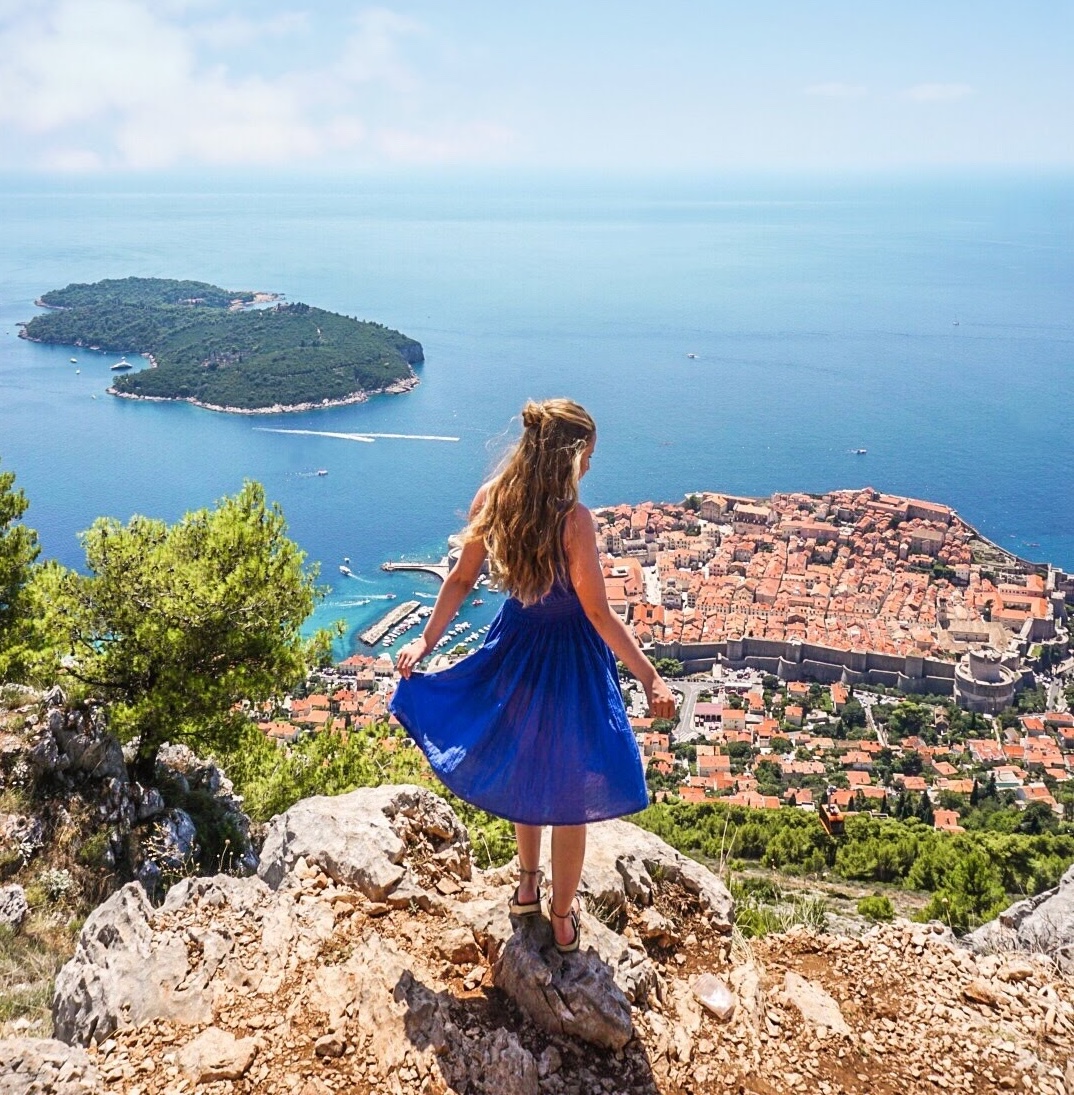
For some of the most breathtaking views you will find in Croatia, hike to the summit of Mount Srđ via the Way of the Cross trail. It’s a moderate 3.4-mile out-and-back trail that starts about a 20 to 25 minute walk from the Pile Gate. Most people reach the summit in 40 minutes to an hour, and while it’s not technically difficult, the trail is steep and almost entirely exposed, so I suggest starting early in the morning to avoid the intense midday heat. Alternatively, you could time your hike for about 90 minutes before sunset so that you can enjoy one of the most spectacular sunset views in the city! Just make sure to have a flashlight or headlamp on hand, since you’ll be returning after sunset.
Affordable Things to Do in Dubrovnik
Dubrovnik also is filled with lots of affordable activities that are absolutely worth setting aside some of your trip budget for! Below are my top suggestions:
Take a free walking tour of Dubrovnik (Tip-based)

One of my all-time favorite budget travel tips in any European city is to start your trip with a free walking tour, and Dubrovnik is no exception! Dubrovnik has several free walking tour options available to book, which operate on a tip-based model (meaning there is no upfront cost to join). Most people tip around €5 to €15 per person, making it one of the most affordable and genuinely rewarding ways to spend a few hours in a new city.
In Dubrovnik specifically, a free walking tour is something I HIGHLY recommend doing on your first day, before you start exploring independently. A good guide will give you the historical context that makes everything you see afterwards feel so much richer. You will learn about the rise and fall of the Republic of Ragusa, one of the most remarkable independent city-states in European history. You will hear about the devastating 1667 earthquake that destroyed much of the original city, and how it was rebuilt into the beautiful city you see today. And perhaps most poignantly, you will learn about the 1991 to 1992 siege of Dubrovnik, when the city was shelled during the Croatian War of Independence, at which time the Old Town suffered significant damage (thankfully, it has been meticulously restored since then).
Walk the City Walls (€40)

While the entrance fee to Dubrovnik’s city walls is a bit pricey at €40 per ticket, they are included with the Dubrovnik Pass (which again, I highly recommend purchasing as a budget traveler). The 2-kilometer loop around Dubrovnik’s stunning Old Town is absolutely breathtaking! You’ll find postcard-worthy views around every corner as you look out over terracotta rooftops backed by the shimmering turquoise colors of the Adriatic. This is worth every euro, and I would consider it a non-negotiable on any first visit to Dubrovnik.
I strongly recommend going at 8:00 am when the walls open. This allows you to beat the heat and the crowds. By midday in summer (and even throughout shoulder season), the walls become extremely crowded and incredibly hot, as there is very little shade along the route. Trust me, the early wakeup call is absolutely worth it and can make the difference between a miserable experience and a trip highlight!
Visit Lovrijenac Fortress (€15)


Lovrijenac Fortress is one of Dubrovnik’s most iconic monuments, located just outside of the old town and perched at the top of a 37-meter sheer cliff face, directly above the Adriatic. It was once the city’s primary defence against attacks from the sea, and now visitors can go inside and take in the stunning surrounding views. If you are a Game of Thrones fan, this is another “must-visit” filming location in Dubrovnik, as it was used for the Red Keep’s exterior in King’s Landing! Entry to Lovrijenac Fortress is included with the Dubrovnik Pass, since the fortress is technically part of the city walls.
Visit Lokrum Island (€30)

Lokrum Island is a short 15-minute ferry ride from Dubrovnik’s Old Port, and it is one of the best day trips you can do from Dubrovnik. I 100% recommend setting aside a day for Lokrum, especially if this will be your first time visiting Dubrovnik.
Lokrum is a lush nature reserve filled with pine trees, rocky swimming coves, a saltwater lake, botanical gardens, ruins of a Benedictine monastery, a 19th-century fortress with panoramic views, and even free-roaming peacocks that you’ll see wandering all around the island!

If you are a fan of Game of Thrones, a visit to Lokrum is an absolute must. Not only was it used as the filming location for the city of Qarth, but there is a dedicated Game of Thrones museum where you can even get a picture of yourself sitting on the original Iron Throne. I definitely geeked out the first time I visited during GOT’s peak popularity!

The ferry and island entrance fee is €30 for adults (€5 for children aged 7 to 18), which includes both the round-trip crossing and admission to the nature reserve. Once you’re on the island, everything else is free! If you purchase the 3-day or 7-day Dubrovnik Pass, you will receive a discounted rate.
Tickets can only be purchased at the official kiosk at the Old Port on the day of travel. Note that the Dubrovnik Pass does not include access to Lokrum (though, as I mentioned, longer-term passes do provide a discount).
Ride the Dubrovnik Cable Car (€30 return)

If you don’t have the time or ability to tackle the free hike up Mount Srđ, you can opt to take the 4-minute-long Dubrovnik Cable Car that’s located right outside of the Old Town walls. The views from the top are absolutely jaw-dropping, and you can see the entirety of the Old Town, Lokrum Island, the surrounding coastline, and, on a clear day, even the mountains of Bosnia and Herzegovina in the distance! A round-trip ticket costs €30 for adults, or €17 one-way.
Explore Dubrovnik’s Museums

Dubrovnik has a pretty impressive collection of museums, and if you have the Dubrovnik Pass, the majority of them are completely free to enter! I know museums aren’t for everyone, but Dubrovnik’s museums are one of the best ways to understand the fascinating history behind the city. Plus, they are the perfect place to beat the intense afternoon heat!
The best museums included in the Dubrovnik Pass are:
- Franciscan Monastery and Pharmacy: Dating back to 1317, this beautifully preserved monastery is home to one of the oldest functioning pharmacies in Europe! It also has a small museum with medieval manuscripts, liturgical objects, and original pharmaceutical equipment dating back to the Middle Ages! The cloister garden here provides a serene, crowd-free oasis in the middle of the busiest part of the city.
- Rector’s Palace: One of the most impressive late-Gothic buildings in all of Dalmatia, the Rector’s Palace served as the seat of government during the Republic of Ragusa. Today, it houses a collection of portraits, coins, furniture, and artifacts that bring the city’s medieval golden age to life. The building itself, alone, is worth the visit.
- Maritime Museum: Located inside the St. John’s Fortress, Dubrovnik’s Maritime Museum has an extensive collection of beautiful ship models, navigational instruments, and historical maps that fill the space, and offers stunning, sprawling views from the fortress walls over the Old Harbour.
- Ethnographic Museum (Rupe): Housed in a 16th-century grain store carved directly into the rock, the Rupe is one of the most atmospherically unusual museums you will ever visit. The unique collection here documents traditional Dalmatian folk life through costumes, tools, and everyday objects, and the sheer drama of the subterranean space makes it unlike anything else in the city.
- Cultural History Museum (Knežev Dvor): Set across multiple rooms of the Rector’s Palace complex, this collection digs deeper into Dubrovnik’s civic history, with original documents, keys to the city, and ceremonial objects from the Republic of Ragusa era.
Even if museums are not usually your thing, I HIGHLY recommend at least popping into the Rector’s Palace and the Franciscan Monastery and Pharmacy while you are in the Old Town. Both are extraordinary, both are included in the pass, and both offer something genuinely different from just walking around the streets. Dubrovnik’s history is fascinating, and seeing it brought to life inside the actual buildings where it happened makes the whole city feel even more special!
Watch the Sunset from Buža Bar or Cave Bar More

Two of Dubrovnik’s most famous bars, Buža Bar and Cave Bar More, offer some of the best drinks and sunset experiences in the city. Buža Bar is a hidden “hole in the wall” bar literally built into the outside of the Old Town walls, with wooden platforms and chairs perched directly over the sea. There is a small entrance fee (a few euros), but once you’re inside, you can order a drink, find a spot on the rocks, and watch the sun sink into the Adriatic. Cave Bar More is located in an actual cave carved into the cliffs along the Lapad coastline. There is also a gorgeous outdoor terrace right at the water’s edge, where you can watch the sunset over the Adriatic with a cocktail in hand. It is slightly further from the Old Town, and because it is less famous than Buža, it tends to be a little less busy, even in high season! Regardless, make sure to arrive at either bar early to secure a seat with an incredible sunset view.
Go on a Sea Kayaking Tour (from ~€35)

I went on a sunset kayaking tour during my first trip to Dubrovnik in 2017, and I’m happy to say that prices have not gone up all that much for this activity! Several operators run kayaking tours, typically lasting around 2 to 3 hours. I suggest signing up for a sunset tour as the views were stunning and the heat was less intense than midday. Most tours include a stop at the Betina Cave (a sea cave only accessible by water), swimming, snorkeling, and often a glass of wine at the end. Prices currently start from around €35 to €50 per person, which is exceptional value for how memorable the 0o9experience is. I’ve linked a few well-rated options below:
Take a Game of Thrones Tour (from ~€23)

If you are even a casual Game of Thrones fan, a GoT walking tour of Dubrovnik is such a cool experience! Dubrovnik served as the primary filming location for King’s Landing throughout the series, and the Old Town is packed with iconic filming locations at nearly every turn, including the Red Keep, the Walk of Shame, the Purple Wedding, Blackwater Bay and so many more! Tours typically last around 2 hours, cover all the major filming locations throughout the Old Town, and start from around €23 per person. When I went on this tour, the guide had actually been an extra on the show during one of the seasons, which meant the whole experience came with incredible insider knowledge, behind the scenes stories, and details that never made it to screen.
Best Budget-Friendly Food Spots in Dubrovnik

Dining out can be incredibly expensive in Dubrovnik, especially in the Old Town (especially in those spots with terrace seating on the Stradun or near the main gates). These restaurants tend to charge a significant premium for their location. However, with a bit of research, you can eat very well in Dubrovnik without spending a fortune! Below are a few highly rated budget-friendly dining options:
- ¨Bakeries and burek shops: Burek (a flaky, savory pastry filled with cheese, meat, or spinach) is a Balkan staple and makes for a delicious and cheap meal, typically costing €2 to €4. Some of the best places to grab burek in Dubrovnik include Bosančica Dubrovnik (amazing Bosnian-style burek in Lapad),Holy Burek inside the Old Town, and Pekarnica Pile right outside of Pile Gate.
- Vito Napoletana 2 Pizzeria: Located in the heart of the old town, with some of the best pizza in the area. Pizzas start at €11, and there are options for takeaway or indoor/outdoor seating.
- Otto street food: Fast food restaurant in Lapad, just steps away from Bellevue Beach. It serves American-style food like burgers, wings, and pulled BBQ sandwiches. The perfect place to grab a cheap, tasty bite after spending time on the beach!
- Preša: located inside the Old Town, Preša is a beloved local fast food spot serving sandwiches, wraps, and other quick bites at reasonable prices. Great for a grab-and-go lunch while sightseeing.
- Marangun Food & Bar Room: Located in Lapad near Bellevue beach, Marangun is a fantastic bistro that serves regional Dalmatian dishes for a reasonable price. This is the priciest option I’ve included, as it’s a sit-down restaurant, but the food was delicious and authentic for a reasonable price. This was our personal “splurge” restaurant in Dubrovnik! I imagine the prices would be significantly higher if this restaurant were located inside the Old Town, because the quality was fantastic!
Pro Tip: If you are staying in an Airbnb or apartment with kitchen access, you will save a lot on food costs by cooking a few of your own meals. There are several well-stocked supermarkets in Lapad and Gruž where you can pick up fresh ingredients and tasty snacks for a fraction of restaurant prices. What to Avoid When Visiting Dubrovnik on a Budget

Restaurants on the Stradun or Near Major Attractions
The single biggest budget trap in Dubrovnik. Restaurants lining the main boulevard and clustered around Pile Gate are almost universally overpriced — you are paying for location, not quality. A simple pasta dish can easily hit €20. Walk two streets away and find something genuinely better for half the price.
Last-Minute Accommodation in Peak Season
Leaving your booking to the last minute in summer almost guarantees you will pay far more than necessary or end up with a poor-quality stay. There are no real last-minute bargains in peak season Dubrovnik — demand consistently outpaces supply.
Defaulting to Private Taxis for Every Journey
Taxis and Uber add up fast. For short, frequent journeys around the city, the public buses are so much cheaper that defaulting to taxis will meaningfully impact your overall budget. Save Uber for airport runs, late nights, or when the bus is genuinely impractical.
Buying Attraction Tickets Without Checking the Pass First
Before buying any individual ticket, check whether the Dubrovnik Pass gives better value. The walls alone cost €40 — almost the same as the €45 day pass that also covers transport and 10+ other attractions. Many visitors overspend simply by not checking first.
Conclusion
Although Dubrovnik continues to become an increasingly more expensive destination over the recent years, I hope this post gives you the confidence (and peace of mind) to still plan a trip – it’s absolutely still possible to visit this beautiful city on a budget!
Visiting Dubrovnik on a budget in 2026 just requires a bit more planning and patience. It’s no longer the budget backpacking paradise it used to be, but Dubrovnik is still as beautiful as ever, and I don’t want the skyrocketing prices to deter you from visiting.
Planning a trip to Croatia? Check out my other Croatia blog posts to help plan your trip!
📌 Pin this post to Pinterest for later: