A Guide to Lukomir, the Highest (and Most Remote) Village in Bosnia & Herzegovina


I always love visiting small local villages during my travels, and Lukomir has to be one of the most memorable ones that I’ve experienced! Tucked into the mountains near Sarajevo, Lukomir is Bosnia and Herzegovina’s highest permanently inhabited village, sitting at around 1,495 meters high on the southern slopes of Bjelašnica. It’s also one of the last semi-nomadic settlements left in Europe, where a small group of families still spend their summers tending sheep, weaving wool, and living almost exactly the way their ancestors did centuries ago!
In my opinion, visiting Lukomir is one of the most unique and underrated experiences that you can have in the Balkans. It’s not nearly as famous as Mostar or Sarajevo’s Old Town, but visiting was truly magical, and felt like stepping into a completely different era of Bosnian life. When in the tiny mountain village, you’ll encounter stone houses, grazing sheep, and incredible mountain views that stretch out over one of Europe’s deepest canyons.
In this guide, I’ll cover everything you need to know about visiting Lukomir, including its history, what life is actually like there today, the best time of year to go, how to get there (and whether you really need a guide), and what to expect once you arrive!
A Brief History of Lukomir

Locals say Lukomir is at least 300 to 500 years old, and at the edge of the village, you’ll find scattered medieval tombstones called stećci, dating all the way back to the 14th and 15th centuries! These stone markers are protected as cultural monuments, giving you a glimpse into how long people have been living in this remote corner of the mountains.
In 2009, Lukomir was officially declared a national monument of Bosnia and Herzegovina and was recognized as a cultural landscape, since it’s one of the only monuments in the country where people are still actively living. It’s essentially a living ethnological museum, rather than a preserved relic, frozen in time.
What Life is Like in Lukomir Today

Lukomir is a semi-nomadic village. While there are roughly 50 houses in the village, only a portion of them are inhabited at any given time from May to October. During this season, the semi-nomadic villagers return to Lukomir to tend their land and graze their sheep, and then head back down the mountain before winter sets in. Some sources put the seasonal population at as many as a few dozen families during peak summer months, though it fluctuates from year to year.
The village still runs on a traditional, agricultural rhythm. Women in Lukomir continue to hand-knit traditional wool garments, including the thick wool socks the village has become known for, while sheep, dogs, chickens, and the occasional cow wander freely through the village. It’s not a performance for tourists, but simply a look into daily life in Lukomir! Visitors are essentially being welcomed into someone’s actual home and getting to experience their way of life.
Why Lukomir is Worth Visiting

I’ll be honest, before visiting Lukomir, I wasn’t sure what to expect! I’d seen photos online, but nothing quite prepared me for how special it felt to actually experience Lukomir in person.
Lukomir gives you a glimpse into a way of life that’s quickly disappearing. As younger generations move to cities like Sarajevo for work and modern conveniences, places like Lukomir, where life still revolves around livestock, the seasons, and family land, are becoming increasingly rare.

On top of the immersive cultural experience, the scenery surrounding Lukomir alone makes the trip well worth it! The village sits right on the edge of Rakitnica Canyon, one of the deepest canyons in Europe, with views that drop nearly 800 meters down to the river below. The old stone houses in the village are surrounded by rolling alpine meadows, and the complete absence of modern development makes it feel worlds away from the hustle and bustle of European city life. It’s truly a one-of-a-kind experience!
Best Time of Year to Visit Lukomir

The best time to visit Lukomir is during the summer months, ideally between June and September. This is when the village is most active, the weather is mild, and the wildflowers covering the surrounding meadows are in full bloom!
Lukomir is impossible to visit in the winter, since the gravel road leading into the village becomes completely impassable under the yearly heavy snowfall. The families who live there seasonally pack up and head back down the mountain before winter arrives, typically returning in late April or May once the snow has melted enough for the road to reopen.
Even in the height of summer, I’d still recommend packing a light layer! At this altitude, the weather can shift quickly, and mornings and evenings tend to be noticeably cooler than you might expect.
How to Get to Lukomir

Lukomir is located about 50 kilometers from Sarajevo, but don’t let the relatively short distance fool you. This is a slow journey and takes at least an hour to an hour and a half of driving.
Most of the drive from Sarajevo follows a paved road up through Bjelašnica Mountain, but the final 10 to 11 kilometers into Lukomir consists of entirely unpaved gravel roads. This part of the drive is bumpy and dusty, with lots of potholes.

As you wind through the open karst landscapes and grassy meadows, you’ll almost certainly run into a few jams along the way, but not the ones you’d usually expect! Don’t be surprised if you find yourself waiting patiently behind a flock of sheep (and their very dedicated sheepdogs) as they casually cross the road in front of you. This is the only type of traffic jam you’ll experience here, and marks the slow pace that you can expect throughout your whole visit to Lukomir!
Should You Take a Guided Tour or Go on Your Own?

You technically can drive to Lukomir on your own, but I’d strongly recommend booking a guided tour instead, especially if you’re not used to driving on rough mountain roads. The gravel section can be tricky to navigate, particularly if you’re in a standard rental car, rather than a 4×4, and a local guide will also be able to share much more context about the village’s history and culture than you’d get exploring on your own.
I opted for a small group tour from Sarajevo, and it ended up being one of my favorite days during my entire trip to Bosnia. Our guide knew several of the villagers personally, which made a huge difference in how welcome we felt once we arrived!
If you’d rather go at your own pace, hiking to Lukomir from the nearby village of Umoljani is also a popular option for more independent travelers, which I’ll touch on more below.
What to Expect When Visiting Lukomir

Walking into Lukomir truly feels like stepping into a bygone era. As you wander along the uneven stone paths throughout the village, you’ll likely spot elderly locals going about their daily routines: milking sheep, hanging laundry, or simply sitting outside their homes and watching the day go by. Chickens and roosters wander freely between the houses, and depending on the time of day, you may catch a shepherd guiding a flock of sheep through the village or out toward the surrounding meadows.
Several of the village women set up small tables outside their homes selling hand-knit wool socks, gloves, and other woolen goods, and I highly recommend picking up a pair (or three) as souvenirs! Make sure you bring cash, since there are no ATMs or card readers up in the village. Keep in mind that most vendors won’t be able to break large bills, so smaller bills and coins are your best bet.

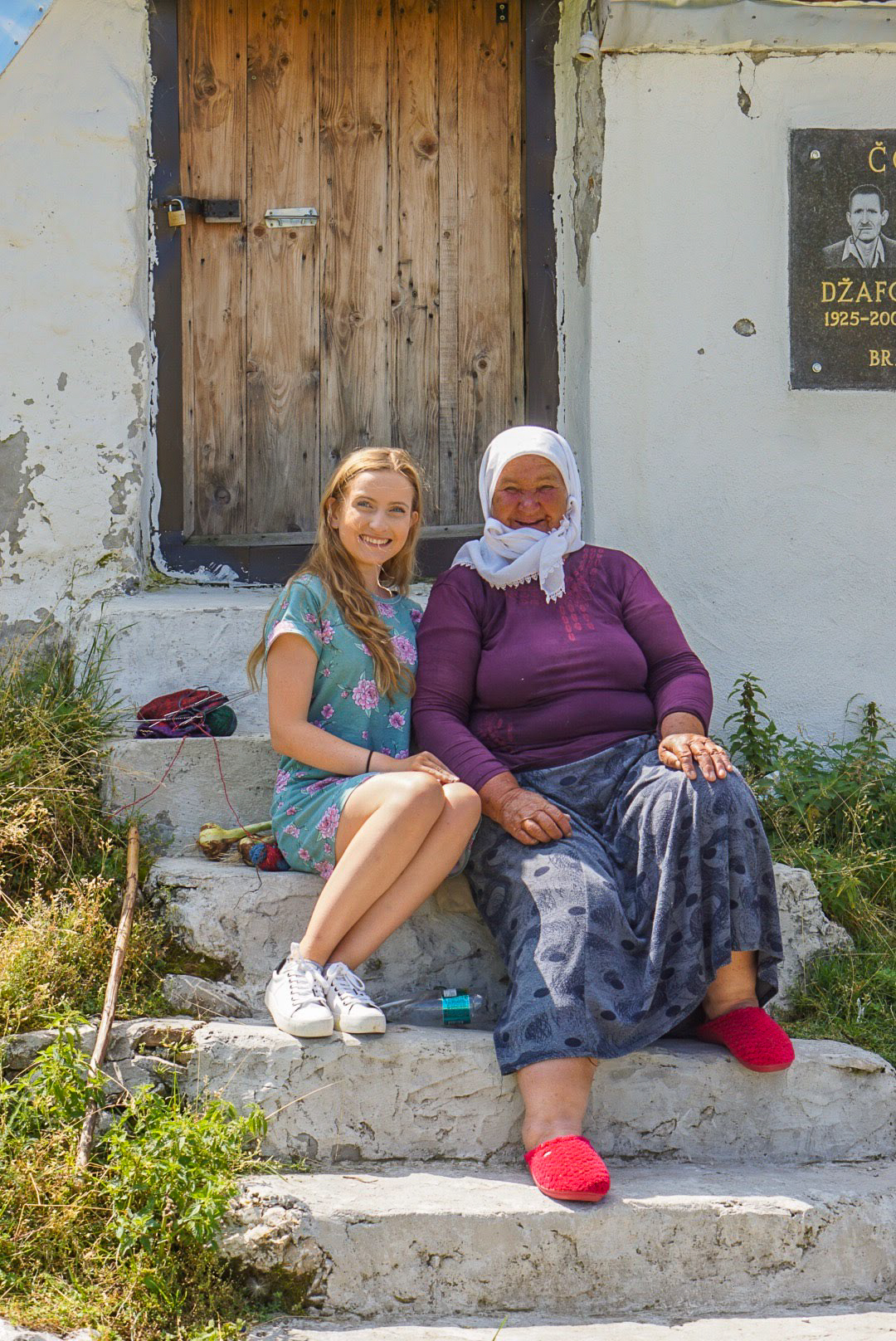
I ended up chatting with the sweetest elderly woman while buying a pair of socks from her, with my guide translating between us. She was incredibly warm-hearted and funny, and at one point, she said something to my guide that made him burst out laughing. When I asked what she’d said, he told me that she’d just taught me my very first Bosnian swear word while she was trying to decide what to charge for her socks!

Once you’ve wandered through the village itself, make your way to the lookout point at the edge of town. The view over Rakitnica Canyon is absolutely spectacular, with layers of mountains fading into the distance and an almost 800-meter drop straight down to the river below. Make sure to bring your camera, because you’ll definitely want to snap some shots!

Hiking in Lukomir

If you’re interested in hiking, Lukomir is a fantastic home base for nearby treks. The village connects to several mountain trails, including a well-known route to and from Umoljani, a smaller village about 6 kilometers away, which takes roughly 2 to 3 hours (one way), depending on your pace. The trail winds through alpine meadows and rocky terrain, and you’ll likely encounter far more sheep than people along the way.

For more experienced hikers, the trail along the rim of Rakitnica Canyon offers some of the most dramatic scenery in the entire region, with sweeping views down into the gorge for much of the walk. Just be sure to wear sturdy shoes, since the terrain can be uneven and rocky in several sections.
- Rakitnica Canyon Overlook: Sweeping views into one of Europe’s deepest canyons.
- Bjelašnica Ridgeline: Panoramic views back toward the Olympic mountain.
- Open Meadows: Wildflowers and grazing sheep along most of the route.
Where to Stay in Lukomir

The majority of visitors treat Lukomir as a day trip from Sarajevo, and a few hours in the village is more than enough time to soak it in, since it’s so small. With that said, if you’d like to spend the night, simple guesthouse-style accommodations have started popping up in the village in recent years, giving you the chance to watch the sunset (and sunrise) over the canyon, without anyone else around.
Just keep in mind that accommodations in Lukomir are very basic, often with shared bathroom facilities and no WiFi, so go in with realistic expectations. If you’re not one to rough it and are looking for a more comfortable home base, I’d recommend staying in Sarajevo and visiting Lukomir as a day trip instead.

🏔️ Stay in Lukomir
Spend the night in the village itself with one of the simple, family-run guesthouses. Expect basic rooms, shared bathrooms, and no WiFi, but you’ll get to watch the sunset and sunrise over Rakitnica Canyon without another visitor in sight.
Find a Stay in Lukomir →
🏙️ Stay in Sarajevo
Most travelers base themselves in Sarajevo and visit Lukomir as a day trip. This gives you a comfortable home base with full amenities, plus easy access to everything else Sarajevo has to offer before or after your mountain adventure.
Find a Stay in Sarajevo →Where to Eat in Lukomir


Photos courtesy of Kod Kapetana Tea
Despite how remote it feels, Lukomir actually has a handful of small restaurants, run by local families. These lovely spots serve traditional Bosnian dishes like fresh cheese, kajmak, homemade bread, burek, and, of course, cevapi! I had a fantastic lunch at Kod Kapetana Tea. Many tours also include a traditional home-cooked lunch with a local family as part of the experience, which I highly recommend doing, if it’s offered – it’s a wonderful way to support the local community directly, and makes for an unforgettable experience.
Conclusion
Lukomir might not be on every traveler’s Bosnia itinerary, but, in my opinion, it’s one of the most unique and memorable experiences that you can have in the country. Between its rich history, its still thriving semi-nomadic culture, the welcoming locals, and the jaw-dropping views over Rakitnica Canyon, it’s a place that offers something you just can’t find anywhere else in Europe. Just remember to plan your visit between late spring and early fall, bring cash for wool socks and a meal, and prepare for a slow, bumpy, sheep-filled ride up the mountain!
Planning a trip to Bosnia and Herzegovina? Check out my other Bosnia blog posts to help plan your trip!
Pin this post for later: