The Perfect 7-day Itinerary for Bosnia & Herzegovina


I’ve traveled pretty extensively throughout Europe, including visits to every country in the Balkans, and Bosnia & Herzegovina is one of my absolute favorite countries that I just can’t get enough of and plan to revisit time and time again. There’s something special about this country, whose people have gone through so much, shown such strong resilience, and maintained an enduring, infectiously joyful spirit.
Bosnia & Herzegovina isn’t as glamorous as Croatia or Italy, but there is something so real and raw about it. It’s not perfect. It’s a little gritty. But it has a soul and depth that you just won’t find in more commercial tourist destinations in Europe.
I love the country so much, and after visiting 3 times now, I have a good feel for the best spots to visit if you only have a week to spend in Bosnia & Herzegovina.
7 Days in Bosnia & Herzegovina will allow you to visit its highlights without overly rushing anything. Here is your perfect 7-day itinerary for Bosnia & Herzegovina!
🇧🇦 Bosnia & Herzegovina FAQ
Getting to Bosnia & Herzegovina
Flying into Sarajevo (SJJ) is the most direct option, and it’s exactly where this itinerary begins. If you can find a reasonable connection (usually through hubs like Istanbul or Vienna), I highly recommend starting your trip right in the heart of Bosnia.
With that said, Sarajevo can sometimes be a little tricky or pricey to reach for transatlantic travelers, in particular. If that’s the case for you, a really popular alternative is to fly into Dubrovnik, Croatia (DBV) instead. So many people pair Croatia with Bosnia, and Dubrovnik is only about 2.5 hours from Mostar by car or bus! If you go this route, you can simply flip the itinerary around: start in Mostar, then make your way up to Sarajevo and Jajce.
Days 1-3: Sarajevo

Often called the “Jerusalem of Europe” and the city where “East Meets West”, Sarajevo is one of the most unique capital cities in Europe. You’ll hear the Muslim call to prayer echoing from minarets one moment, and Christian church bells ringing the next. Ottoman-era bazaars sit just steps from grand Austro-Hungarian buildings. It’s a city of contradictions, and its history is no different: the whole city is teeming with rich history, both inspiring and heartbreaking.
Three days here give you the perfect amount of time to soak in the old town, learn about the city’s incredible (and at times devastating) history, and potentially even sneak in a day trip to one of many amazing places nearby!
Day 1: Arrival in Sarajevo
After you arrive in Sarajevo and check into your accommodation, I suggest exploring the old town to get your bearings. Sarajevo has a lovely old town with lots of fascinating sites to see and things to experience, so you’ll probably come back here every day during your time in Sarajevo! Don’t feel pressured to check off everything on this list in one day, especially if you’re tired and jet-lagged.
Here are a few highlights in the Old Town not to skip over during your next few days in the city:
Optional: Take a Free Walking Tour

I always recommend signing up for a free walking tour to kick off your time in a new city, and Sarajevo has some of the BEST ones in Europe! I suggest booking with Neno and Friends Sarajevo Walking Tours. They offer two free tours: the East Meets West tour, which covers the past 500 years of the city’s history, and the War Scars & New Times tour, which focuses on the 1990s Bosnian War and the city’s recovery.
I went on both during my time in Sarajevo and cannot recommend them enough! These were honestly two of my all-time favorite walking tours that I’ve been on anywhere in Europe, and Neno and Merima were fantastic, incredibly knowledgeable guides. Each tour lasts about two hours, so I’d suggest doing the East Meets West tour first to get acquainted with the city, then saving the War Scars & New Times tour for your second or third day in Sarajevo.
Baščaršija

Baščaršija is Sarajevo’s 15th-century Ottoman bazaar and the historic heart of the city. You’ll pass by the iconic wooden Sebilj fountain in the center of the square (watch out for the pigeons; there are hundreds of them, and people are always feeding them here). Surrounding the square, you’ll find narrow cobblestone streets lined with copper workshops, artisan stalls, traditional cafes, and little shops selling everything from handmade jewelry and Turkish-style lamps to woven rugs and Bosnian coffee sets.
Baščaršija is a hotspot for locals and tourists alike, and it can get quite busy, especially in the summer months or on weekends. Keep an eye on your belongings, because while Sarajevo is a very safe city overall, this is the most common spot for tourists to get pickpocketed.
Sarajevska čaršija & Morića Han

Sarajevska čaršija translates to “Sarajevo Bazaar”, and it’s the historic Ottoman market area of Baščaršija. Here you’ll find the traditional craft shops, artisan stalls, and trade lanes that have been the city’s commercial and social hub for centuries.
Wander through the covered markets and bustling lanes of the old bazaar, where you’ll find everything from spices and sweets to handmade crafts and souvenirs. Be sure to stop by Morića Han, the only surviving Ottoman-era inn (or caravanserai) left in the city. Dating back to the 16th century, this beautifully restored courtyard once gave tired merchants and their caravans a place to rest as they traveled the trade routes. Today, it’s home to cozy cafes, carpet shops, and a peaceful atmosphere that feels worlds away from the busy streets just outside. I highly recommend grabbing a traditional Bosnian coffee here as you soak in the surrounding history; it’s the perfect spot to rest and refuel on caffeine while exploring the old town!
Kazandžiluk Coppersmith Street

On a quiet side street next to the town square is Kazandžiluk, Sarajevo’s famous Coppersmith Street, where you can watch skilled artisans hand-hammering copperware just as they have for centuries. I definitely think this is one of the more unique spots in Sarajevo, and it’s well worth wandering down. It’s certainly a great place to window-shop or grab a unique, beautifully crafted souvenir!
Sarajevo Meeting of Cultures

For a unique experience you won’t find in any other European city, walk down Ferhadija pedestrian street and look for the line in the pavement that says “Turn one way, you’re looking at Ottoman architecture; turn the other, and it looks exactly like Vienna!”
Sunset at Yellow Fortress (Žuta Tabija)

If it’s a clear day (and you’re not too tired), there is no better way to wrap up your first day in Sarajevo than by catching the sunset at the Yellow Fortress. Keep in mind Sarajevo’s hills are notoriously steep, and it’s about a 15-to-20-minute walk up from Baščaršija, so you’ll be feeling the burn. You’ll also pass right by the peaceful Kovači Martyrs’ Cemetery on your way up, and at the top, you’ll be rewarded with the most beautiful views of the city and its surrounding scenery.
If you’re too exhausted from your travel day to catch the sunset, I still suggest prioritizing this for one of your evenings while in Sarajevo. The views are magical, and there’s even a small open-air cafe at the top where you can grab a refreshing Turkish lemonade or a traditional coffee to sip while watching the sun set behind the mountains. It’s a favorite hangout for both locals and backpackers, offering a really laid-back atmosphere that you won’t want to miss!
Day 2: City Tour, Museums, and Culture

Start your second day slowly with a traditional Bosnian coffee served in a copper džezva at one of Sarajevo’s many incredible cafes. Cafe culture is a core part of Bosnian culture, and you’ll often see locals sitting at a cafe for hours, enjoying coffee and, oftentimes, cigarettes (another huge part of local culture) while chatting with friends. Caffe Divan, set in the courtyard of Morića Han, was one of my favorite spots in the city to do this. It’s a peaceful place to sit for a while before the day gets going. Honestly, there are so many fantastic cafe options in the city, and you really can’t go wrong with any of them, so explore the options and find your favorite!
After fueling up on caffeine the local way, make your way to a few of Sarajevo’s most significant landmarks:

- Sarajevo City Hall (Vijećnica): This striking building is one of the best examples of Austro-Hungarian architecture in the city, with a beautiful Moorish-revival design. It was almost completely destroyed during the Siege of Sarajevo and has since been carefully rebuilt, standing as a living piece of history and a symbol of the city’s resilience.
- The Latin Bridge: Just a short walk from City Hall, this modest Ottoman-era stone bridge holds an outsized place in world history. It was here, on the street corner beside the bridge, that Archduke Franz Ferdinand of Austria was assassinated in 1914, setting off the chain reaction that led to the outbreak of World War I. There’s a small museum right on the corner if you’d like to learn more about the assassination and the era surrounding it.
- Gazi Husrev-beg Mosque: Dating back to 1531, this is the largest historic mosque in Bosnia & Herzegovina. It sits in the heart of Baščaršija, within a larger complex that includes a madrasa, a library, and the founder’s domed tomb. Visitors are welcome inside during prayer times, and you can visit at any other time, as well. It’s well worth visiting to admire the intricately painted interior and quiet courtyard. Just remember to dress modestly, as this is an active place of worship. Headscarves are provided at the entrance for women.
Must-Visit Museums in Sarajevo

Sarajevo’s museums are some of the most moving I’ve ever experienced, and I think they’re an essential part of understanding the country. Here are the ones I most recommend:
- Museum of Crimes Against Humanity: One of the most moving and memorable museums I have ever experienced. The exhibits include personal belongings, photographs, and stories of war survivors. You’ll be left with chills as the museum offers a deep insight into the effects the war had on the people of Sarajevo.
- War Childhood Museum: Another one of the most powerful museums I’ve ever set foot in. It tells the story of the war through the eyes of children who lived through it, using their own personal objects and testimonies to provide a deeper understanding of the history.
- Gallery 11/07/95: A deeply moving memorial gallery dedicated to the victims of the Srebrenica genocide.
- War Museum 1992 (Ratni muzej): A raw, personal museum documenting the Siege of Sarajevo, the longest siege of a capital city in modern history.
- Sarajevo 80s Museum: A lighter, nostalgic look at daily life in Sarajevo during the Yugoslav era. A nice palate cleanser after the heavier museums.
- Svrzo’s House: A beautifully preserved Ottoman-era home that gives you a real glimpse into traditional Bosnian family life.
- Olympic Museum: A fun stop celebrating the 1984 Winter Olympics, which Sarajevo proudly hosted!
Day 3: Mount Trebević, Tunnel of Hope, and Final City Exploration
Take the Sarajevo Cable Car up to Mount Trebević

On your final day in Sarajevo, take the Sarajevo Cable Car up to Mount Trebević, the mountain that overlooks the city. A round-trip ticket costs €15.50, or you can pay €10 for a one-way ride if you’d prefer to hike back down. The ride up offers gorgeous panoramic views over Sarajevo, and the summit is the starting point for one of the city’s most unique sights.
The Abandoned Olympic Bobsled Track

From the top of the cable car, you can hike along the famous bobsled track left over from the 1984 Winter Olympics. Once a proud symbol of the games, the track was used as an artillery position during the war and now winds through the forest completely abandoned, covered in vibrant, ever-changing graffiti, and slowly being reclaimed by nature. It’s a genuinely surreal place to walk through, and one of the most photographed spots in the city.
The War Tunnels Museum (Tunnel of Salvation)

Afterwards, make your way to the War Tunnels Museum, one of Sarajevo’s most important historical sites. During the siege, this hand-dug tunnel ran beneath the airport runway and served as the city’s only lifeline to the outside world, allowing for the delivery of food, supplies, and aid. You can still walk through a preserved section of the tunnel and see exhibits that tell the story of how the city survived.
Back to Sarajevo
From there, head back to the city center for a relaxed rest of the day. Use the afternoon to explore any museums or monuments you missed during your first two days, or join the War Scars & New Times free walking tour for a deeper look at the city’s recent history and recovery. However you choose to spend it, end your time in Sarajevo with one last stroll through the old town to soak it all in before moving on to Mostar.
Day 3 Alternative: Day Trip to Lukomir

Take a guided day trip to Lukomir, Bosnia’s highest and most isolated mountain village. You’ll see traditional stone houses and a lifestyle that has remained unchanged for centuries. Read more about this awesome day trip in my dedicated guide.
Where to Stay in Sarajevo

Swissotel Sarajevo
$$$$A sleek, upscale hotel offering some of the most refined stays in the city, with spacious modern rooms, a spa, and beautiful views over Sarajevo. Perfect for those wanting a little extra comfort and polish.
Book now →
Hotel Festival
$$$A lovely, comfortable hotel with warm, helpful staff and a fantastic location within walking distance of the old town. The rooms are modern and spotless, and the breakfast gets rave reviews!
Book now →
Pigeon Square Rooms
$$You truly cannot beat this location, right in the heart of Baščaršija and steps from the cafes, shops, and main square. Cozy, clean rooms and friendly hosts make it a fantastic budget pick.
Book now →
Hostel Vagabond Sarajevo
$A super social, centrally located hostel right in the old town, with welcoming staff and a fun atmosphere. Perfect for backpackers looking to meet other travelers while staying steps from the action.
Book now →Where to Eat in Sarajevo

- Dveri: Family-run restaurant in Baščaršija, with a warm, cozy atmosphere and rustic wooden interior. Their menu is full of traditional Bosnian dishes, including grilled meats, stews, and hearty soups!
- Buregdžinica Bosna: This tiny place specializes in burek, serving some of the best that you‘ll find in the city! Burek is a must when in Bosnia – it’s great for a grab-and-go breakfast or a quick snack
- Konoba Luka Sarajevo: Tavern-style restaurant serving a mix of traditional Bosnian and Mediterranean cuisine. They are beloved for their fresh fish dishes and their grilled meat platter!
- Ćevabdžinica Nune: No trip to Sarajevo is complete without having ćevapi, and this is one of the best places to try this dish in the city! They also serve other traditional Bosnian grilled meat dishes, but their ćevapi should be your main priority here.
Days 4-5: Mostar

Mostar is Bosnia’s most famous tourist town, known for its postcard-worthy Stari Most bridge and picturesque old town. Cobblestone streets wind past Ottoman-era buildings, copper workshops, and cozy cafes, as the stunning emerald-green Neretva River flows beneath. I’ve visited Mostar 3 times now, and it’s easily one of my favorite towns in all of Europe.
Mostar is one of the most popular day trips from Dubrovnik, with tons of day tour options and many visitors arriving by bus every day. Thanks to these daytrippers, the old town can get super busy during peak hours, but it’s relatively quiet in the mornings and evenings.
By staying longer, you get to experience the magic of the old town in the early morning and evening, once the day-trippers have left, and you can venture out a little beyond the tourist center to see what local life is really like. Trust me, it’s worth it!
Day 4: Sarajevo to Mostar via Morning Train
Sarajevo → Mostar

Catch the 7:15 am train from Sarajevo to Mostar, which is renowned as one of the most scenic train rides in all of Europe! It winds through dramatic mountains, river gorges, and gorgeous countryside, and a 1-way ticket costs between €7 and €9. If you’re renting a car, the drive is equally stunning, and you’ll also have the flexibility to pull over at scenic lookouts (and avoid the early wake-up call).
Once you arrive, drop your luggage off and ease into Mostar the local way, with a coffee at a cafe in the old town. Mostar has fantastic cafes, many of which offer incredible views of the Stari Most bridge, making it one of the most idyllic towns in Europe to slow down in and enjoy a cup of coffee or some tea.
Optional Activity: Free Walking Tour

I highly recommend booking a free Mostar walking tour with Sheva, a fantastic guide who lived in Mostar during the 1990s war. Hearing the city’s history firsthand from someone who lived through it is incredibly moving and adds so much depth to your visit. (Remember to bring cash to tip your guide!)
Explore Mostar’s Old Town

As I mentioned earlier, Mostar’s old town is best experienced in the early morning, before the crowds arrive, and late afternoons / early evenings, once the day-trippers have left. Take advantage of this time to stroll through the old streets without the congestion from the crowds of day trippers. Here are the best things to see and do in the old town – if it starts to get overwhelmingly busy, grab lunch just outside of the old town to avoid day-tripping crowds, step into a museum, or take a walk on the newer side of the city to get a glimpse into more local life in Mostar!
- Stari Most Bridge: Mostar’s most iconic landmark, and the reason most people come to visit in the first place. The most popular photo spot is from the beach area below, where you can also sign up for a short rafting ride along the river for around 10 euros.
- Karađoz-Beg Mosque: The largest mosque in Mostar, and well worth a visit. If you climb to the top of the minaret, you’ll be rewarded with a beautiful view of Stari Most. Entry is €5.00 and hours vary, but it’s generally open 9 am-2:30 pm & 1:30-4 pm (or until 6 pm in the summer months).
- Museum of War and Genocide Victims: I know you’ll have already visited museums about the Bosnian genocide in Sarajevo, but if you have the time, I highly recommend this one in Mostar, too. As a tourist in Bosnia, I think it’s incredibly important to understand the devastating history that happened here just 30 years ago. Entry is €10.
- Bišćević House: A beautifully preserved Ottoman-era home filled with traditional furnishings, offering a lovely glimpse into historic Mostar family life. Entry is just €2.
- Lučki Most Bridge: A great alternative spot for views of Stari Most. It’s relatively quiet, compared to the busy beach area below.
- Souvenir Shopping: The old town bazaar is lined with shops selling everything from handmade copper products to football jerseys. Two woman-owned shops that I love to support are The Spirit of Herzegovina (full of high-quality local products) and Aroma of Herzegovina (another gem with fantastic, affordable skincare products). There are also several fantastic coppersmith shops, where I purchased a few of my all-time favorite pieces of jewelry!

Optional Activity: Take a Coppersmith Class!

For a really unique and hands-on activity, book a coppersmith class at AbrakaBakra. Coppersmithing plays an integral role in Bosnian culture, and it’s an art form that is slowly fading. Learning how to coppersmith and making your own piece is such a cool and rewarding experience! I made a bracelet and had so much fun learning about the traditional coppersmithing process firsthand. If you’re crafty, this is an absolute must when visiting Mostar.
Day 5: Blagaj, Počitelj, and Kravica falls

On day 5 of your 7-day Bosnia itinerary, you’ll head out on a day trip to visit some of the most beautiful locations in Bosnia! You’ll start with a visit to Blagaj, a village that boasts a picturesque, Ottoman-style monastery built right into a towering cliff, sitting just above a beautiful emerald spring. You’ll then visit Počitelj, a nearby medieval village, home to just 14 residents (and a lot of cats), and finally, you’ll end your day by swimming below the stunning Kravica Falls.
These three places are easy to combine in a single day trip. If you have a rental car, you can easily visit all three of these locations at your own pace; if not, you can either rent a scooter in Mostar or book a guided group tour that takes you to all of these spots (there are tons available from Mostar, as this is a popular day trip itinerary).
Blagaj

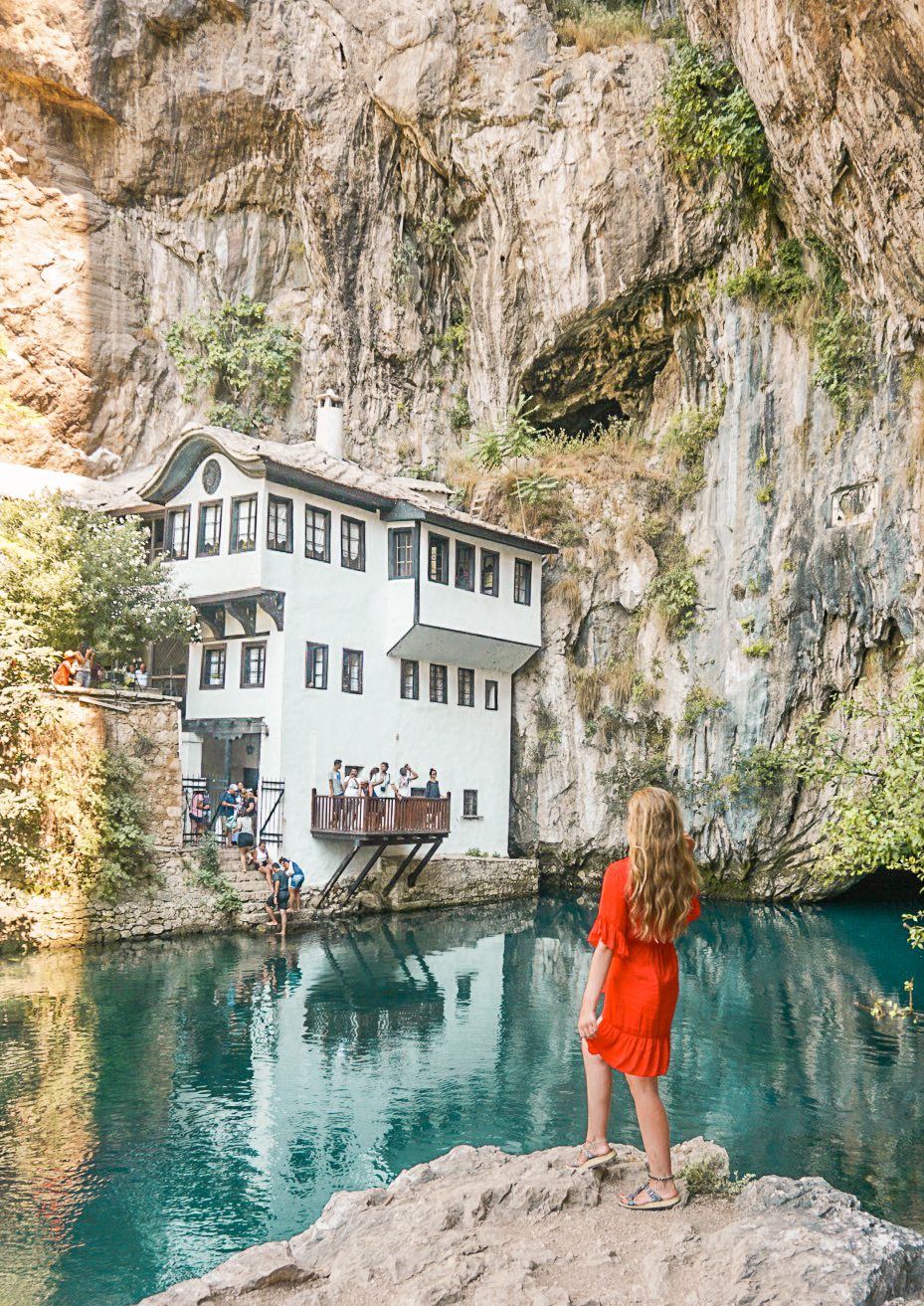
Just a 20-minute drive from Mostar, Blagaj is a small village famous for the stunning Blagaj Tekija, a 600-year-old Dervish monastery built right into the base of a towering cliff, with the crystal-clear Buna River springs running underneath it. It’s one of the most photogenic spots in the country, and truly looks like something out of a postcard. There is a small parking fee of €2 (4 BAM), which must be paid in cash, so make sure to have change on hand if you’re going on a self-driven excursion.
From the parking lot, you’ll stroll past numerous souvenir vendors and then continue for a few minutes as you stroll along the river to reach the tekija. Entry to step inside the monastery is €5 per person, and you’ll need to remove your shoes and dress modestly, as it’s a place of worship. Women will be provided with headscarves to cover their hair before entering. The interior is quite simple and decorated in traditional Bosnian furnishings, with lovely views of the Buna River from the windows and balcony!
After you’ve explored the small monastery, make your way to the opposite side of the river (you’ll have to go up and around, as there is no direct path connecting the two spots). Make sure to snap some photos on the opposite side of the river – it’s one of the most iconic photography spots in all of Bosnia!

Blagaj is home to several riverside cafes and restaurants, so after you snap some photos, you can grab a Bosnian coffee or a traditional tufahija dessert to enjoy as you soak in your surroundings. It’s one of the most beautiful coffee shop views in the country!
Počitelj

Next, make your way to Počitelj, a tiny medieval Ottoman village built right into a hillside above the Neretva River. As you wander through its ancient cobblestone streets, it truly feels like stepping back in time, thanks to the village’s maze of weathered limestone houses, crumbling fortress walls, and ambling pathways that stagger up the hillside. You can even climb up to the fortress (the Kula) for sweeping panoramic views over the valley below! It’s a relatively short but steep hike to the top, and the views are 100% worth the effort.
Towards the top of the village near the fortress, there are a couple of small souvenir stalls that are worth checking out to support the villagers. I purchased a few pairs of wool socks that the shopkeeper’s mother knitted by hand! Make sure to pick up some fresh fruit juices or dried figs, sold by local grandmas, while you’re at it!
If you’re a cat person like me, you’re in luck because Počitelj is famous for its residential kitties! I came across a ton of cute, friendly cats when I was there, and they made my experience all the more memorable!
Kravica Falls

I suggest saving Kravica for last on your excursion day. The Kravica Falls are a collection of cascading waterfalls that fan out into a wide, turquoise swimming hole of crystalline waters. My first thought upon arrival was that it felt like something you’d be more inclined to see in Southeast Asia rather than Europe! In the summer months, you can swim right below the falls, which is exactly why I suggest leaving Kravica for the end of your day so you can take as much time as you want to enjoy the falls (and you won’t be wet for the rest of the day)!
There’s nothing better than cooling off here after a day of exploring in the Herzegovina heat! Entry is €10 (20 BAM) per person from April through October, and it’s free in the winter months. Even if you are visiting outside the summer months and it’s too cold to swim, Kravica is still worth a visit just to admire its sheer beauty! Be sure to pack your swimsuit, a towel, and some optional water shoes (the rocks can be a little slippery).
Back to Mostar
After a long day of exploring, head back to Mostar for a well-deserved dinner and a peaceful stroll around the Old Town after the day-tripper crowds have disappeared.
Where to Stay in Mostar

Kriva Ćuprija Hotel
$$$An absolutely charming hotel set right along the river, just steps from the old town. Some rooms have balconies with stunning views, and the on-site restaurant serves up some of the best traditional sač dinners you’ll have in Bosnia!
Book now →
Shangri La Mansion
$$A stunning villa-style guesthouse right in the heart of the Old Bridge area, with a gorgeous rooftop terrace that’s perfect for unwinding after a day of exploring. Welcoming hosts and just a 2-minute walk to Stari Most!
Book now →
Villa Park
$A lovely, great-value guesthouse with comfortable rooms, a peaceful setting, and genuinely kind hosts. It’s an easy walk to the old town, making it a fantastic budget-friendly base for your time in Mostar.
Book now →
Hostel Lovely Home
$A cozy, welcoming hostel that lives up to its name, with a warm, homey feel and incredibly helpful hosts who go out of their way to make you feel at home. A wonderful budget pick close to the old town.
Book now →Where to Eat in Mostar

- Aščinica Sahan: Fantastic family-owned restaurant just a few minutes outside of the old town. I had my favorite meal in Mostar here. Dishes change from day to day, and if they have sarma (stuffed pickled cabbage rolls), you have to order it! Visit this spot around lunchtime because once the food they prepare for the day is gone, the restaurant closes.
- Tima – Irma: Delicious cevapi and grilled meat dishes in the heart of the old town! This was our go-to takeaway spot in Mostar (they also offer limited indoor/outdoor seating).
- Terrace Lagero: Traditional restaurant with delicious local food and incredible views of the Stari Most Bridge.
Days 6-7: Jajce

For the final stretch of your 7 days in Bosnia and Herzegovina, you’ll head north to Jajce, a medieval town famed for its stunning waterfall that cascades right down the center of town!
As I mentioned earlier, having a rental car will be incredibly helpful for reaching Jajce, but it’s completely doable by bus, too. Direct buses leave twice daily from Mostar, and tickets cost €12–15 euros, one-way.
Day 6: Mostar-Jajce + Jajce Exploration
On Day 6 of your 7 days in Bosnia, you’ll head to your last stop of the trip; the beautiful town of Jajce!
Enjoy one last morning coffee with a view of Mostar’s old town before setting off for your final destination: Jajce! In my opinion, Jajce is one of the most beautiful towns in all of Europe. Yet, so many visitors opt to only explore Mostar and Sarajevo during their time in Bosnia. While Jajce is slowly gaining international popularity, it remains relatively undiscovered by tourists.
Mostar → Jajce

The journey from Mostar to Jajce is about a 2-and-a-half to 3-hour drive or a 4-hour bus ride. Once you’ve checked in and dropped off your luggage, I suggest exploring Jajce’s beautiful old town!
Pliva Waterfall

Jajce’s most iconic landmark, Pliva Waterfall, is where the Pliva River cascades 22 meters right into the heart of town, making it one of the only waterfalls in the world located in the center of a city! There’s a viewing platform where you can get up close to the falls (you will get wet, be forewarned). It’s beautiful at any time of day, but it’s especially magical when lit up in the evening, so try to swing by both during the day and after dark if you can! Entry costs €2.50 per person, and they can also be viewed for free from above or from the bridge adjacent to the waterfall.
Wander the Old Town

From Pliva Waterfall, head back up and take a stroll through Jajce’s old town, which has several attractions worth visiting if you have the time for it! A few highlights include the Jajce Catacombs below the fortress, the AVNOJ Museum, the Ethnographic Museum Jajce, and Gradski Park. Jajce is incredibly walkable – it doesn’t take too long to explore all of its nooks and crannies.
Jajce Fortress

Perched at the top of a hill high above the town, you’ll find a 14th-century medieval fortress that was once home to some of the most powerful dynasties of the Kingdom of Bosnia. The walk up to Jajce Fortress is a little steep with uneven cobblestones, so make sure to wear comfortable, closed-toed walking shoes.
Entry to Jajce Fortress is 5 BAM (€2.50) per person. From the top, you’ll find breathtaking panoramic views over Jajce’s terracotta rooftops, the two rivers winding through town, and the mountains surrounding everything. It’s the perfect spot to watch the sunset, and the golden hour glow over the valley is incredible!
Back to the Old Town

After the sun sets below the mountains, head back to the old town to enjoy a delicious Bosnian meal! There are lots of lovely little restaurants in town, where you’ll find far more locals than tourists! After dinner, I suggest taking one last look at the Pliva Waterfall as it’s lit up at night before turning in for the night.
Day 7: Pliva Watermills, Bridge of Love, & Departure
On your final morning in Jajce, grab a coffee at one of the cafes in the town center and pick up some burek at Bedem before you explore the last couple of highlights just outside of town before heading back to Sarajevo for your departure.
Pliva Watermills (Mlinčići)

Just 10 minutes north of Jajce, you’ll find a beautiful nature park dotted with tiny wooden watermills set on the water between Jajce’s two Pliva Lakes. Hundreds of years ago, these mills were used by local farmers to grind grain, and while they’re no longer in use today, they’ve been beautifully preserved and now feel like an open-air museum. The whole area is protected, and it’s even been recognized as a cultural landscape and a national monument of Bosnia & Herzegovina!
Little wooden pathways connect the mills, letting you stroll right through them for an up-close look. Below the mills, miniature falls cascade and rush over the rocks, giving the whole scene a picturesque, storybook quality. It’s easily one of the most photogenic spots in the country, and if you visit in the fall. I did. The surrounding foliage makes it even more magical.
Pliva Lake

From the watermills, you can continue to stroll along Pliva Lake, a stunning, glassy lake reflecting the mountains that surround it. There are actually two Pliva Lakes, a Big Lake and a Small Lake, connected by the little channel where the watermills sit, and together they make up one of the most peaceful corners of the Jajce area. The water is remarkably clear and calm, and the whole setting feels worlds away from the busier tourist spots further south in Bosnia.
In the summertime, the lakes come alive as a favorite local getaway. You’ll find lakeside cafes, swimming spots, and boat rentals here, and renting a kayak or paddleboat is a wonderful way to get out on the water and take in the scenery from a different angle. There are also shaded walking paths and grassy areas perfect for a picnic, so it’s worth packing a few snacks if you’d like to linger. Whether you go for a swim, paddle around the lake, or simply sit at a cafe with a coffee, Pliva Lake is a lovely spot to slow down, soak in the scenery, and relax before heading back to town.
Bridge of Love

A 3-minute drive (or 22-minute walk) from the watermills, you’ll find a peaceful pathway that leads to the Bridge of Love, a quaint wooden footbridge that links the upper and lower sections of the lake. As you stroll across, you’ll pass over rushing waterfalls that plunge into the river below, and the sound of the cascading water combined with the surrounding greenery makes it feel like a little hidden oasis. It’s a wonderfully tranquil spot, and one of those places that feels untouched and off the typical tourist trail.
The bridge gets its name from the “love locks” that couples have attached to its railings over the years, each one a small symbol of lasting love (a sweet little detail to look out for as you cross!). It’s the perfect place to take a peaceful stroll while taking in the views and snapping a few final photos before wrapping up your time in the Jajce area.
Return to Sarajevo
From Jajce, you can make your way back to Sarajevo (around 2.5 to 3 hours by car or bus) to catch your flight home, or continue onward to your next destination. If you flew into Dubrovnik and flipped the itinerary at the start, you’ll instead be looping back toward Croatia from Jajce.
Where to Stay in Jajce

Prenoćište Slapovi
$$$Charming riverside retreat situated outside of Jajce, near Pliva Lakes. It offers beautiful mountain views and a lovely pool on site, and is about as luxurious as it gets in the Jajce area.
Book now →
Hotel Stari Grad
$$Jajce’s most famous hotel, located right in the heart of the old town. It has a fantastic on-site restaurant with a glass floor above the remains of a Turkish hammam, which is an experience in itself!
Book now →
Privatni Smještaj Kurtalija
$Top-rated private guesthouse in the old town, known for its fantastic location near the fortress, stunning views from the terrace, and a host who welcomes guests with traditional Bosnian coffee.
Book now →
Hotel Premium
$Stylish hotel in the heart of the old town with modern rooms and affordable prices.
Book now →🚘 All options above include free on-site parking
Where to Eat in Jajce

- Restoran Cosmopolit: Great restaurant right above the waterfall area in the town center, I ended up eating here twice because the food was so good! They serve traditional Bosnian stews and comforting, homestyle dishes at very affordable prices, and the staff is incredibly warm and welcoming.
- Restoran Omerbegova kuća: Cozy casual restaurant with traditional Bosnian furniture, serving meat dishes in huge hearty portions!
- Restoran Stari Grad: Part of Hotel Stari Grad in the town center, this is one of the best places to eat in Jajce! The meal we got here was not only tasty, but the inside is constructed right on top of Turkish ruins that you can see through a glass window.
If You Have Extra Time

Bosnia is a wonderful country for slow traveling. If you have the time and can extend your trip by a few days, then you can experience the beautiful country at a more relaxed pace (the way the locals do). You can discover hidden cafes, try out multiple restaurants, and immerse yourself further in Bosnian culture and day-to-day life! If you want to keep up with a faster pace, you could extend your trip and visit other highlights like Trebinje, Travnik, or Una National Park.
Conclusion
I hope this 7-day Bosnia itinerary gives you more clarity as you plan your trip! Bosnia is truly one of Europe’s most underrated countries, though it’s steadily gaining international attention, so now is the time to book your trip before it’s packed with tourists!
Planning a trip to Bosnia & Herzegovina? Check out my other Bosnia Blog Posts!