The Ultimate Guide to Mostar, Bosnia & Herzegovina in 2026


Mostar is easily one of the most breathtaking towns in all of Bosnia & Herzegovina (if not all of Europe!), yet it’s still often overlooked for more famous city getaways in Western Europe. I’ve visited Mostar 3 times within the past 8 years, and each time I visit, I fall a little more in love with it!
Mostar is a town with a complicated and heartbreaking history that you’ll encounter the moment you step (just) outside the beautifully restored Old Town. While most visitors only stick to the main tourist area, I really encourage you to explore all of the ins and outs of Mostar beyond Stari Grad. Mostar is hard to put into words. It’s one of those places where photos and stories only get you so far; you really have to walk the city’s streets to feel the full weight of everything that it’s been through and everything it’s become.
In this guide, I’ll cover everything you need to know about visiting Mostar, including how much time you should spend there, where to stay, the top things to do, where to eat, and some practical tips to help you make the most of your trip!
Mostar is located in the Herzegovina region of southern Bosnia & Herzegovina, along the banks of the Neretva River. The currency used is the Bosnian Convertible Mark (BAM), though many businesses in Mostar’s Old Town also accept Euros (more on that below). The official language is Bosnian, and the nearest airport is Sarajevo International Airport, though many travelers also arrive via Dubrovnik or Split.
Top Tips for Visiting Mostar

How Much Time Do You Need in Mostar?

Most visitors experience Mostar via a rushed day trip from Split or Dubrovnik, but I honestly think that type of visit does the town a disservice. The longest I’ve personally spent in Mostar was 7 nights, since I was working remotely at the time and wanted to experience the town at a slower pace. Most visitors stay around 2 or 3 nights, which is a solid amount of time, if you aren’t only passing through on a day trip. You can easily see all of Mostar’s main highlights on a busy day, but I think it’s best experienced spread out over a few days.
If you’re coming from Croatia and only have a few hours to spare before heading back, you’ll still get to see the highlights, but you’ll be rushing the whole time and missing out on Mostar’s incredible cafe culture and the quieter, more local side of the city. I’d recommend at least 3 nights if you want to see everything Mostar has to offer and still have time for a day trip to nearby Kravica Falls or any of the surrounding villages.
Where to Stay in Mostar
I most recently stayed in an apartment near Stari Most Bridge, which was the perfect base during our 7-night stay in Mostar. However, if you’re only visiting for a couple of nights, I’d actually recommend booking a hotel instead. Many hotels will let you drop your bags off before your room is ready, or store them at the front desk, which gives you a lot more freedom to keep exploring right up until you need to catch your bus or flight.
Here are some top hotel recommendations in Mostar, for every budget:

Kriva Ćuprija Hotel
$$$An absolutely charming hotel set right along the river, just steps from the old town. Some rooms have balconies with stunning views, and the on-site restaurant serves up some of the best traditional sač dinners you’ll have in Bosnia!
Book now →
Shangri La Mansion
$$A stunning villa-style guesthouse right in the heart of the Old Bridge area, with a gorgeous rooftop terrace that’s perfect for unwinding after a day of exploring. Welcoming hosts and just a 2-minute walk to Stari Most!
Book now →
Villa Park
$A lovely, great-value guesthouse with comfortable rooms, a peaceful setting, and genuinely kind hosts. It’s an easy walk to the old town, making it a fantastic budget-friendly base for your time in Mostar.
Book now →
Hostel Lovely Home
$A cozy, welcoming hostel that lives up to its name, with a warm, homey feel and incredibly helpful hosts who go out of their way to make you feel at home. A wonderful budget pick close to the old town.
Book now →Best Time to Visit Mostar

I’ve experienced Mostar in May, August, and October, and October was hands down the best experience for me, weather-wise. Temperatures were mild and comfortable, perfect for walking around the Old Town all day without breaking a sweat. August, on the other hand, was by far the hottest and most uncomfortable month, and it also brought in the most tourists. May was lovely, still fairly hot with a decent number of tourists, but nowhere near as crowded as August! If I had to pick just one month to visit Mostar, I would absolutely choose October every single time.
I have yet to visit Mostar in the winter months, but from what I have heard, it’s pretty dead during that season, which can actually be a good thing if you want to avoid crowds! Most shops in the Old Town’s bazaar remain open, but hours may be more limited. If you don’t mind bundling up, I imagine visiting Mostar in winter could be a great time to visit, too!
Getting to Mostar

 Pro Tip: If you’re renting a car in Croatia and driving into Bosnia, double-check with your rental company ahead of time, since not all rental agreements allow cross-border travel, and those that do often charge an additional fee for it. I rented a car from National in Dubrovnik and had to pay a one-time fee of €60 since we were crossing into a non-EU country.
 Getting around Mostar

Mostar is a relatively small city, and you can pretty much walk everywhere on foot. The Old Town itself is entirely walkable and car-free, so you won’t need to worry about driving once you’re there. If you’re planning to visit nearby towns or waterfalls, though, having a rental car (or booking a guided tour) will give you a lot more flexibility for day trips.
If you’d rather not walk everywhere, Mostar does have a proper local bus system called the Mostar Bus. There are more than a dozen numbered lines running throughout the city and surrounding villages, and a couple of them are actually quite useful for travelers, since Lines 10 and 12 both connect central Mostar to Blagaj, which is home to the beautiful Blagaj Tekija dervish house! Tickets can be purchased directly from the driver when you board.
Taxis are also easy to find throughout the city, and while many do run on a meter, it’s always smart to confirm the fare (or agree on a price) with your driver before you start moving, especially if you’re heading somewhere far outside of the center.
Understanding Mostar’s War History

Even though the Old Town has been meticulously restored, you don’t have to walk far outside of it to be quickly reminded of what Mostar went through during the war and genocide that occurred in the 1990’s. Some buildings still stand with sandbags blocking their doors and windows, which is a defense mechanism that was used to help stop bullets from entering, and plenty of apartment buildings throughout the city are still riddled with holes from shrapnel, with some slowly crumbling to the ground.
I never learned about the Bosnian War in school, and it was a topic I was extremely uneducated about when I visited Mostar the first time. I suggest doing some research on the war before your trip in order to have an even deeper appreciation and respect for the city.

The Sniper Tower and the city’s War and Genocide Victims museum are some of the most sobering places to visit in Mostar and are important stops if you want to understand what the city and its people endured during the war of the 1990’s. I’d also recommend visiting the cemetery to pay your respects to the genocide victims, which is a chilling experience as you realize just how many of the death dates are from 1993, the year Mostar was under siege and destroyed.
Top Things to Do in Mostar
Stari Most (Old Bridge)
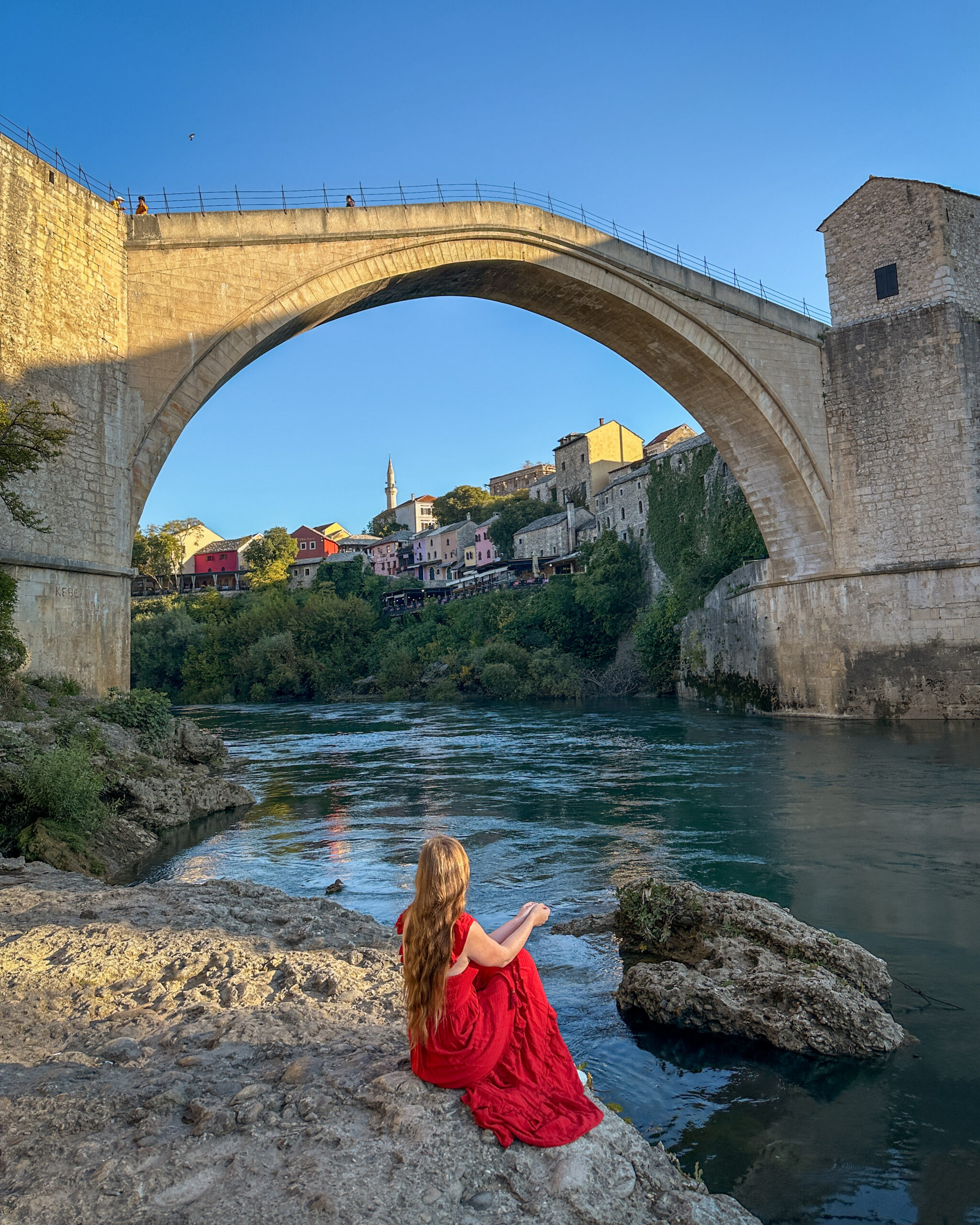
Stari Most is the heart and soul of Mostar, and no visit is complete without spending time here. The original bridge was destroyed during the war in 1993, and the version that stands today is a careful reconstruction, using traditional building techniques and materials, that was completed in 2004, which makes standing on it feel even more meaningful.
The bridge is famous for its divers, who leap from the top into the icy Neretva River below. I watched several people make the jump during my summer visits (the divers typically stop once the weather cools in the fall). I will say, I would never do this myself! There is actually a training and certification process that local divers go through before they’re allowed to jump, and I met a Kiwi guy volunteering at a local hostel who had gone through it (and survived), but I’d only ever recommend attempting it if you’re already a highly skilled diver.

I remember walking up to the bridge for the first time and being totally overtaken by how picturesque the scene in front of me was. It’s truly one of the most beautiful views of a town that I have ever witnessed, with the turquoise Neretva River winding beneath the bridge’s dramatic stone arch. Knowing that people actually climb to the top of Stari Most and plunge into the chilly river below only adds to the surreal feeling!
Free Walking Tour with Sheva

If you only do one organized activity in Mostar, I highly suggest booking a free walking tour with Sheva! He is an experienced tour guide who lived in Mostar during the war in the 1990s, and hearing the city’s history firsthand from someone who actually lived through it adds a depth to your visit that you simply can’t get from a guidebook. It’s an incredibly moving experience, and one I’d recommend to anyone visiting the city. Just remember to bring some cash to tip your guide at the end!
Mostar Old Town and Kujundžiluk Bazaar

Mostar’s Old Town is a maze of cobblestone streets lined with Ottoman-era buildings, and Kujundžiluk is the historic bazaar street leading up to Stari Most. It’s packed with shops selling copper crafts, jewelry, and souvenirs, along with plenty of cozy cafes and restaurants!
For me, strolling through the Old Town streets will never get old. No matter how many times I’ve walked them, there’s always something new to notice. You’ll hear the gentle tinkering of coppersmiths at work as you pass by, mixed with the low hum of locals chatting over coffee at outdoor tables and vendors calling out as they set up shop for the day. The smell of fresh bread and grilled ćevapi drifts out from tiny doorways, and every so often you’ll catch a whiff of Bosnian coffee brewing somewhere just out of sight!

Kujundžiluk Bazaar is a fantastic place to do souvenir shopping. If you only buy one souvenir in Mostar, make it a piece of copperwork. Look for shops where you can actually see a coppersmith working on pieces in real time, since some of the souvenirs sold around town are mass-produced overseas, rather than handmade locally. I purchased some beautiful handmade copper jewlrey pieces from the shop pictured above!
Pro Tip: If you visit the Old Town midday, however, it’s a far less peaceful experience since Mostar is an incredibly popular day trip from Dubrovnik. So make sure to wander before 10:00 or in the late afternoon/early evening for a more enjoyable experience! Koski Mehmed Pasha Mosque

Right along the riverbank, this beautiful mosque is one of the most photographed spots in Mostar thanks to its minaret, which you can actually climb for one of the best views of Stari Most in the entire city. Entry to the mosque and minaret is 15 BAM and can be paid in cash or by card at the entrance.
The Museum of War and Genocide Victims

Mostar’s Museum of War and Genocide Victims is heavy, but I strongly encourage visiting during your time in Mostar. Inside, there are personal relics and stories of the victims of war. Some of the stories featured in the museum still haunt me years after experiencing it for the first time. Just know that going in, you might want to bring some tissues.
On the top floor of the museum, there is a video presentation with English subtitles on the siege of Mostar that is worth sitting down to watch. You could easily spend well over an hour here reading all of the stories, and it’s definitely not one of those museums you’ll breeze through in 10 minutes. Entrance is €10 (20 BAM).
Crooked Bridge (Kriva Ćuprija)

Just a short walk from the main bridge, Kriva Ćuprija is a smaller, much smaller, quieter version of Stari Most, and most tourists walk right past it without realizing the lore behind it. Local legend says the smaller bridge was built first, as a way for the Ottomans to test whether their construction techniques could withstand the river before attempting the larger Stari Most.
It’s an incredibly photogenic spot in the Old Town, so make sure to stop by to snap a few photos!

Take a Boat Ride Under Stari Most

This is a newer activity in Mostar that’s perfect for someone looking for an adventure! For about €10 (20 BAM), you can take a 10-minute boat ride right underneath Stari Most, giving you a totally different angle on the bridge than you’ll get from land. The boats can go really fast, making it both a thrilling excursion and a sightseeing ride!
Tickets can be purchased at vendor stalls right at the small beach area beneath the bridge.
Enjoy Bosnian Coffee and Explore Mostar’s Cafe Scene

Bosnian coffee culture runs deep here, and taking the time to slow down with a cup is one of the best ways to experience daily life in Mostar! Coffee isn’t just about getting a quick caffeine fix for Bosnians; it’s a lifestyle. The coffee is served in a small copper pot called a džezva, alongside a cube of Turkish delight, and it’s meant to be sipped slowly over conversation, rather than rushed. You’ll find a lot of locals chatting away as they sip coffee for hours at a time! As a couple of locals jokingly warned me, getting coffee for takeaway is a mortal sin in Bosnia (though I’ll admit I loved the takeaway coffee at Fabrika Coffee’s coffee stand).

Mostar’s Old Town is full of cozy cafes tucked into its side streets, and quite a few of them come with the added bonus of a view right over Stari Most, which makes for one of the most idyllic spots in Europe to enjoy your morning coffee. Café de Alma is one of the most beloved spots in the Old Town, sitting right along the riverbank and almost entirely dedicated to traditional Bosnian coffee. Cafe Stari Grad is another local favorite, tucked right at the foot of the bridge on the west side, and it’s about as close as you can get to sipping your coffee with Stari Most staring right back at you. If you want a front-row seat to the mosque itself, grab a table at Cafe Terrace Pasha, right next to Koski Mehmed Pasha Mosque, for one of the best coffee views in the entire Old Town.
Take a Coppersmith Lesson

For a fun hands-on cultural immersion activity, I highly recommend booking a coppersmith class at AbrakaBakra! It’s a small coppersmith shop in a quieter section of the old town, owned by a young copper artist who has practiced the craft meticulously since childhood.
Copperwork has been an important Mostar tradition for centuries, and getting to sit down and design your own piece, rather than just buying one off a shelf, made for one of my favorite memories from the entire trip! If you are a crafty person like me, this is an absolute must when visiting Mostar!
Take in the Views from Hum Hill

Rising above the southwest edge of the city is Hum Hill, standing at about 436 meters, and it’s one of the best panoramic viewpoints you’ll find in all of Mostar. During the war, this hill was used as a sniper position looking down over the city, a history that makes you all the more grateful for the peaceful view you get today. At the very top sits the Millennium Cross, a 33-meter monument built in 2002, and from up there you can take in the full city grid of Mostar below, along with the Neretva River winding its way through the valley.
You can reach the top either by hiking or by car; it’s about 4 miles (6.4 km) round trip from the Old Town if you’re walking, which takes roughly 2 hours up and closer to 1 to 1.5 hours coming back down. If you’d rather skip the climb, a taxi can take you straight to the top!
One important safety note is to always stick to the paved road on the way up, rather than cutting across the hillside, since there are still undetonated landmines left over from the war in areas off the marked path.
Explore the New City

Most tourists never leave Mostar’s Old Town, but crossing the river into the newer part of the city gives you a completely different perspective on daily life in Mostar. You’ll find cafes and restaurants filled almost entirely with locals, rather than the tourist crowds, and you’ll also encounter even more reminders of the war throughout the neighborhoods.

I’d also suggest visiting the Sniper Tower, which was once a bank building known as Ljubljanska Banka, and at the time of the Bosnian War, it was the tallest building in the city. Its height gave a clear line of sight across the river, which is exactly why it was taken over and used as a sniper position throughout the war, terrorizing the people of the city and having a devastating lives of those on the other side of the Neretva. Now, it still stands, serving as a memory of the horrors of the war and a testament to the strength and perseverance of the people of Mostar.
Though you’re not supposed to enter, if you do *somehow* find yourself inside the Sniper Tower, you’ll see a lot of graffiti covering nearly every floor. It used to be a popular place to watch the sunset from the top, but I think that they’ve cracked down a little harder on entering in recent years, so don’t be surprised if you can’t get past the fencing anymore.

While you’re in the area, a few other spots in the new city are worth a quick look. Spanish Square is a small memorial dedicated to the Spanish UN peacekeepers who served in Mostar during the war, and it’s a peaceful little corner to enjoy. The Old Gymnasium, with its striking Moorish Revival architecture from the Austro-Hungarian era, is also worth a glance; today, it’s shared by both Bosnian and Croatian students as part of an ongoing effort to bring the two communities together.


If you’re in the mood for something a little more lighthearted and bizarre, keep an eye out for the Bruce Lee statue tucked into a nearby park, once an unexpected but oddly fitting symbol of unity that locals installed after the war. Unfortunately, the statue was stolen in 2024, and only the podium remains. So, it’s not a sight anymore, per se, but it certainly is a funny thing to look into while you’re in the area.
If you have the energy, the Partisan Memorial Cemetery is worth the walk! It’s a huge memorial honoring the anti-fascist partisan fighters who lost their lives during World War II.
Day Trip to Blagaj, Počitelj, and Kravica Falls

Just outside of Mostar, you’ll find some of the most beautiful day trip opportunities: Blagaj, Kravica Falls, and Počitelj. The good news is that you don’t need to worry about renting a car to visit these places, as they are all popular day trips and multiple tour companies offer daily excursions to these locations!
Where to Eat in Mostar

Mostar has an incredible food scene, and the restaurants here range from cozy hole-in-the-wall spots to beautiful riverside dining right along the Neretva!
- Aščinica Sahan is a fantastic family-owned restaurant just a few minutes outside the Old Town, and it’s where I had my single favorite meal in all of Mostar. The menu changes daily depending on what’s fresh, so if sarma (stuffed, pickled cabbage rolls) happens to be on offer the day you visit, order it without hesitation! Just keep in mind they tend to close up once the day’s food runs out, so this one’s best for lunch, rather than a late dinner.
- Tima Irma became our go-to spot for takeaway ćevapi and grilled meats right in the heart of the Old Town. It’s simple, fast, and consistently delicious, with a bit of outdoor seating if you want to sit and enjoy your meal by the river.
- Terrace Lagero is the place to go if you want a proper sit-down meal with a view, since it looks right out over Stari Most while you eat. The food is traditional and well done, but the setting alone makes it worth booking a table here at least once!
- Restaurant Šadrvan is easily one of the most popular restaurants in Mostar, tucked into a charming courtyard in the heart of the Old Town. It’s touristy for a reason; the food really is delicious, and the setting alone makes it worth a visit!
- Buregdžinica Ago , located in the newer part of the city, serves some of the best burek I’ve had during my entire time in Bosnia. It’s a no-frills, local favorite, and gives you a great excuse to cross the river and see a different side of Mostar.
Frequently Asked Questions
How many days do you need in Mostar?
Is Mostar worth visiting as a day trip from Dubrovnik or Split?
Is Mostar safe?
What is Mostar known for?
Mostar is one of my favorite places in the Balkans. It’s a city I’ve found myself returning to again and again, and I definitely plan to continue to do so in the future! Between the beauty of Stari Most, the charm of the Old Town, and the powerful history that lives just beneath the surface, Mostar is an absolute must-visit spot while in Bosnia & Herzegovina.
Like this post? Pin it for later!


You Might Also Enjoy
 Itinerary
The Perfect 7 Day Itinerary for Bosnia & Herzegovina
A full week through Sarajevo, Mostar, and Jajce, with where to stay, eat, and explore along the way.
 Guide
GuideThe Ultimate Guide to Sarajevo, Bosnia & Herzegovina
Everything to know about Bosnia’s capital, from its old town bazaar to its most moving museums.
 Guide
GuideThe Ultimate Guide to Jajce, Bosnia and Herzegovina
One of Bosnia’s most underrated towns, with a waterfall right in the center and a fortress above it all.